
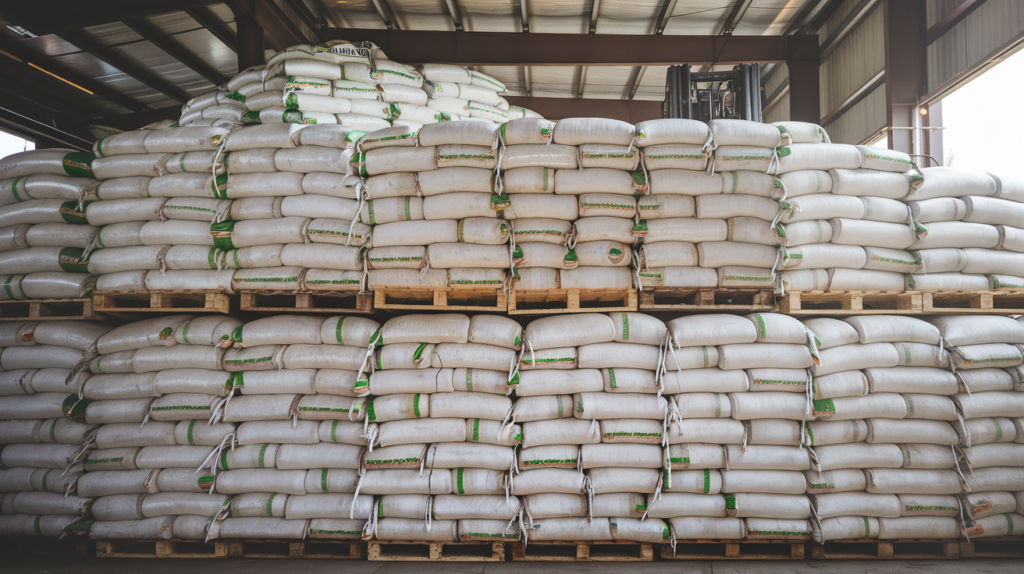
Fertilizers fall into two broad groups: organic and inorganic. Organic fertilizers come from plants and animals, such as manure, compost and bone meal. Inorganic, or mineral, fertilizers are manufactured or mined, such as urea, DAP and potash. Inorganic fertilizers are then grouped by the nutrient they supply: nitrogen, phosphorus, potassium, or a mix.
Knowing the types helps you pick the right product for your crop, soil and budget. This guide explains each group, gives common examples, and shows how farmers choose between them.
Fertilizer types at a glance
| Type | Examples | Main nutrient | Typical use |
|---|---|---|---|
| Nitrogen | Urea (46-0-0), ammonium nitrate, ammonium sulphate | N | Leaf and stem growth |
| Phosphate | DAP (18-46-0), MAP (11-52-0), superphosphate | P | Roots, early growth, flowering |
| Potash | MOP (0-0-60), SOP (0-0-50) | K | Strength, quality, stress tolerance |
| NPK / compound | 15-15-15, 20-10-10, custom blends | N, P and K | Balanced feeding in one product |
| Micronutrient | Zinc, boron, iron, manganese products | Trace elements | Correcting specific deficiencies |
| Organic | Manure, compost, bone meal, blood meal | Mixed, mostly low | Soil health and slow release |
Organic fertilizers
Organic fertilizers are made from natural materials. Their nutrient content is low compared with mineral fertilizers, but they add organic matter, which improves soil structure, water holding and soil life.
Common examples:
- Farmyard manure: animal dung mixed with bedding, the oldest fertilizer in use
- Compost: decomposed plant and food waste
- Bone meal: a slow source of phosphorus and calcium
- Blood meal: a fast-acting organic source of nitrogen
- Green manure: crops such as clover or other legumes grown and ploughed back into the soil
For a closer look, see bone meal vs blood meal and our list of organic fertilizer brands for professional farmers.
Inorganic (mineral) fertilizers
Inorganic fertilizers are concentrated, so a small amount delivers a lot of nutrient. They act faster than organic fertilizers and make it easier to give a crop exactly what a soil test says it needs. Overuse can harm soil and water, so rates matter.

Nitrogen fertilizers
Nitrogen drives leafy growth and is usually the nutrient crops need most. Urea, with 46% nitrogen, is the most widely used. Others include ammonium nitrate, calcium ammonium nitrate and ammonium sulphate, which also supplies sulphur. Read more in our guides to nitrogen fertilizer and urea fertilizer.
Phosphate fertilizers
Phosphorus supports roots, early growth and flowering. DAP (diammonium phosphate) is the most traded phosphate fertilizer and also supplies nitrogen. MAP and superphosphate are other common choices.
Potash fertilizers
Potassium helps crops resist drought and disease and improves the quality of fruit and grain. MOP (muriate of potash) is the cheapest and most common source. SOP (sulphate of potash) is used for crops sensitive to chloride. See what is potash fertilizer and potash vs potassium.
NPK and complex fertilizers
NPK fertilizers contain all three main nutrients in one product. They save time and give balanced feeding. Complex fertilizers are made by chemical reaction, so every granule has the same analysis. Blends are mixes of separate granules. Learn more in NPK fertilizer, NPK ratios and complex fertilizer.
Micronutrient fertilizers
Plants need small amounts of zinc, boron, iron, manganese, copper and molybdenum. A shortage of any one can cut yield even when N, P and K are adequate. Micronutrients are applied to the soil, sprayed on leaves, or included in NPK grades.
Solid vs liquid fertilizers
Most fertilizers are sold as granules or prills, which are cheap to transport and easy to spread. Liquid fertilizers suit drip irrigation and foliar feeding. See liquid vs granular urea for a worked comparison.

How to choose the right fertilizer
- Start with a soil test. It tells you which nutrients are short and which you can skip.
- Match the crop. Leafy crops need more nitrogen. Fruit and root crops often need more potassium.
- Consider the growth stage. Phosphorus matters most early. Nitrogen demand peaks during fast growth.
- Compare cost per kg of nutrient, not per bag. A cheaper bag with less nutrient can cost more in the end.
- Combine where it helps. Many farmers use organic matter for soil health and mineral fertilizers for yield.
For a simple starting point, read the top 3 fertilizers.
Buying fertilizer in bulk
Agromer supplies urea, NPK and other fertilizers to importers and distributors. We are the distributor for a major European NPK producer, including custom formulas. To get an accurate offer, tell us the product, grade, quantity, packaging and destination. See how to buy fertilizer in bulk and our fertilizer range.
Frequently asked questions
What are the main types of fertilizers?
Organic and inorganic. Inorganic fertilizers are then grouped as nitrogen, phosphate, potash, NPK and micronutrient fertilizers.
What is the difference between organic and inorganic fertilizers?
Organic fertilizers come from plants and animals, release nutrients slowly and improve soil. Inorganic fertilizers are concentrated, act quickly and let you supply exact amounts.
Which fertilizer is best for farming?
It depends on the crop and soil test. Most farms use a nitrogen source such as urea plus phosphorus and potassium, either separately or as an NPK.
Can I mix different fertilizers?
Some mix well and some do not. Urea, for example, should not be mixed with calcium nitrate or superphosphate. Check compatibility and mix just before use.
How should fertilizers be stored?
Keep them dry, covered and off the floor, away from direct sun and moisture. Many fertilizers absorb water and cake.
What does NPK mean?
Nitrogen (N), phosphorus (P) and potassium (K). The three numbers on a bag show the percentage of each, such as 15-15-15.