
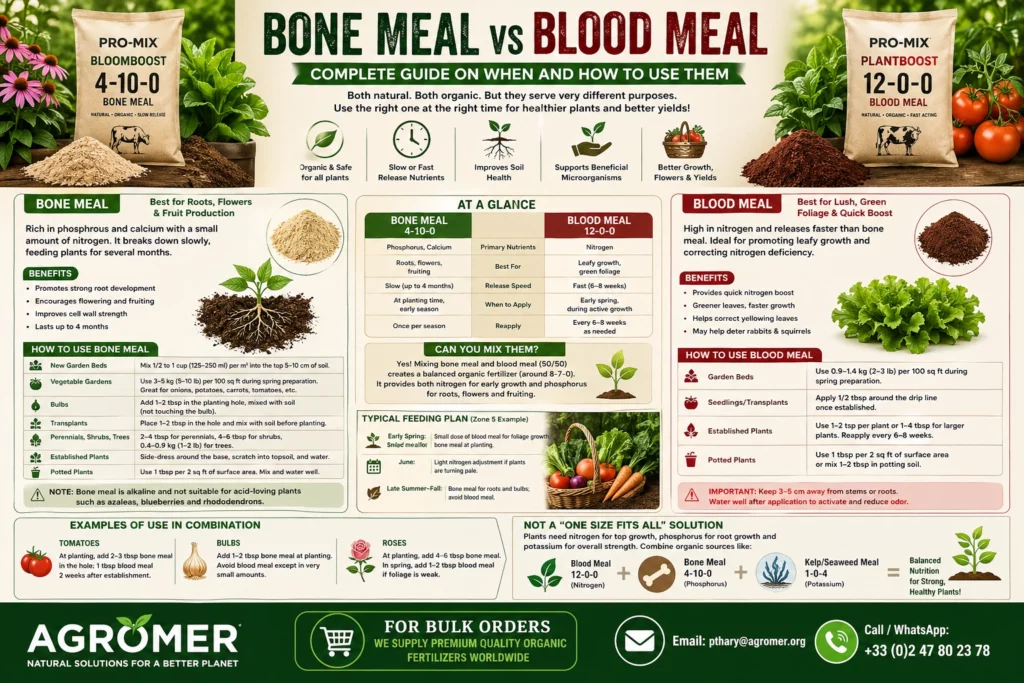
Understand the real difference between bone meal and blood meal, their benefits, application methods, and the right timing to improve plant growth, roots, and flowering naturally.
Bone meal and blood meal have long been trusted by gardeners looking for natural ways to improve soil fertility. Since both are derived from animal by-products, they are considered organic and safe for use in home gardens. However, despite their similarities in origin, they serve completely different roles when it comes to plant nutrition.
Many gardeners struggle to decide which one to use, and more importantly, when to use them. This confusion often leads to poor plant performance or unbalanced growth. The truth is simple: both products are highly effective, but only when used correctly and at the right stage of plant development.
Unlike chemical fertilizers, these organic amendments release nutrients gradually. They also contain trace elements that contribute to better soil health over time. Instead of delivering a quick but short-lived boost, they improve the soil structure and support beneficial microorganisms that help plants absorb nutrients more efficiently.
Blood meal is mainly used to supply nitrogen, which is essential for leafy growth. It acts quickly and is ideal when plants need an immediate boost. Bone meal, on the other hand, is rich in phosphorus and calcium, making it more suitable for root development, flowering, and fruiting.
Understanding the purpose of each will help you get the best results from your garden.
Buy High Quality Bulk Blood Bone Fertilizer for plants from Trusted Manufacturer, Supplier & Distributor
If you’re looking to source blood and bone fertilizer in bulk for farming, distribution, or export, simply fill out our application form today to receive competitive pricing, assured supply, and dedicated support for premium-quality fertilizer and effective crop nutrition solutions.
When to Use Bone Meal
Bone meal is best applied at the beginning of the growing season or during planting. It breaks down slowly in the soil, releasing nutrients over an extended period. This makes it a long-lasting option compared to fast-acting fertilizers.
Once mixed into the soil, it continues to supply phosphorus and calcium for several months. These nutrients are especially important during the early stages of plant growth, when roots are developing and plants are establishing themselves.
Using bone meal at planting time ensures that nutrients are available right where the roots need them. This helps plants grow stronger from the start and improves their ability to absorb water and nutrients later on.
Because of its slow-release nature, bone meal usually needs to be applied only once per season. This makes it convenient and efficient for gardeners who prefer low-maintenance solutions.
Why Bone Meal Is Useful
Bone meal plays a key role in strengthening the foundation of plants. It supports root growth, which is critical for overall plant health. Strong roots allow plants to take in nutrients more effectively and withstand stress such as drought or temperature changes.
Phosphorus, one of its main components, is also responsible for encouraging flowering and fruit production. This makes bone meal especially valuable for flowering plants, vegetables, and fruit-bearing crops.
Calcium, another important nutrient found in bone meal, contributes to the development of strong cell walls. This leads to sturdier stems and better-quality fruits. For example, calcium can help reduce problems like blossom end rot in tomatoes.
Because of these benefits, bone meal is widely used not just in vegetable gardens, but also for ornamental plants, shrubs, and trees.
How to Use Bone Meal Properly
To get the best results, bone meal should always be mixed into the soil rather than left on the surface. This ensures that nutrients are available to plant roots and reduces the chances of attracting animals.
When preparing new garden beds, start by removing weeds and loosening the soil. Mix the bone meal into the top layer so that it is evenly distributed. This creates a nutrient-rich environment for new plants.
In vegetable gardens, bone meal works particularly well for root crops such as carrots, onions, and potatoes. It also benefits crops like tomatoes, which require calcium for proper fruit development.
When planting bulbs, adding a small amount of bone meal into the planting hole can improve flowering. However, it is important to mix it with soil and avoid direct contact with the bulb to prevent damage.
For transplants, bone meal can be added to the planting hole before placing the plant. This helps the plant establish quickly and develop a strong root system.
Established plants can also benefit from bone meal. In this case, it can be lightly worked into the soil around the base of the plant. Watering afterward helps activate the nutrients.
For container plants, a small amount can be mixed into the potting soil. This provides a steady supply of nutrients over time.
One important thing to keep in mind is to leave a small gap between the fertilizer and the plant stem. This prevents potential damage and ensures safe application.
When to Use Blood Meal
Blood meal is best used during the active growing phase of plants, especially in early spring. Unlike bone meal, it acts quickly and provides an immediate source of nitrogen.
Nitrogen is essential for the growth of leaves and stems. When plants lack nitrogen, they often show signs such as yellowing leaves and slow growth. Blood meal can correct this problem effectively.
Since its nutrients are released faster, blood meal needs to be applied more frequently. Depending on the plant’s needs, it can be reapplied every few weeks during the growing season.
However, timing is important. Applying blood meal just before or during flowering can lead to excessive leaf growth at the expense of flowers and fruits. For best results, use it earlier in the growth cycle.
It is also not recommended to use blood meal late in the season, as it may encourage new growth that is vulnerable to cold conditions.
Why Blood Meal Is Important
Blood meal is one of the richest organic sources of nitrogen available. It helps plants grow faster and develop healthy, green foliage.
Gardeners often use it to revive plants that are struggling due to nutrient deficiency. It works quickly and shows visible results in a short time.
Another advantage is its ability to deter certain garden pests. The strong smell can keep away animals like rabbits and squirrels. However, it may also attract other animals, so proper application is important.
By mixing it into the soil and watering thoroughly, you can reduce unwanted attention while still benefiting from its nutrients.
How to Apply Blood Meal
Blood meal should be applied carefully to avoid overfeeding plants. Too much nitrogen can harm plants and disrupt their natural growth cycle.
For garden beds, it can be mixed into the soil before planting. This provides a good starting supply of nitrogen for young plants.
For seedlings, it is best to wait until they are established before applying blood meal. A small amount around the base of the plant is usually enough.
Established plants can be treated by sprinkling blood meal around the base and gently mixing it into the soil. Watering afterward helps activate the nutrients and reduces odor.
In containers, blood meal can be added in small quantities and mixed into the soil. It is important not to overapply, as confined spaces can make plants more sensitive to excess nutrients.
As with bone meal, avoid direct contact with plant stems and roots. Always leave a small gap to prevent damage.
Using Bone Meal and Blood Meal Together
Many gardeners choose to use both bone meal and blood meal to create a more balanced nutrient supply. When combined, they provide nitrogen, phosphorus, and calcium, covering multiple plant needs.
This combination works well in gardens with a variety of plants. While blood meal supports early growth, bone meal continues to provide nutrients for root development and flowering.
Using both together can reduce the need for additional fertilizers and simplify your gardening routine.
Example Feeding Schedule
A simple approach can help you get the most out of these fertilizers.
At the beginning of the season, apply bone meal during planting and use a small amount of blood meal to encourage leafy growth.
During the middle of the growing season, monitor plant health. If leaves appear pale, a light application of blood meal can help.
Toward the end of the season, focus on bone meal for root strength and avoid using blood meal to prevent unnecessary new growth.
Things to Keep in Mind
Plants require three main nutrients: nitrogen for growth, phosphorus for roots and flowers, and potassium for overall health. Bone meal and blood meal only provide part of this balance, so additional sources may be needed.
Organic gardening often involves combining different natural fertilizers to meet all nutrient requirements. This approach not only feeds plants but also improves soil quality over time.
Another advantage of organic fertilizers is their ability to support beneficial soil organisms. These microorganisms play a key role in breaking down nutrients and making them available to plants.
Unlike synthetic fertilizers, organic options work with the natural ecosystem of the soil rather than disrupting it.
Bone meal and blood meal are valuable tools for any gardener. Each has its own purpose, and using them correctly can lead to healthier plants and better yields.
The key is understanding what your plants need and applying the right product at the right time. Bone meal supports roots and flowering, while blood meal boosts leafy growth.
By using both wisely, you can create a balanced and productive garden that thrives naturally.
Scale Your Bulk Orders with Reliable Quality Supply
Searching for dependable blood and bone fertilizer bulk suppliers who can handle large-volume orders without delays or quality issues? Agromer specializes in supplying nutrient-rich blood bone fertilizer in bulk metric ton quantities to clients worldwide. Whether you are placing recurring bulk orders or expanding your distribution network, we ensure consistent quality, competitive pricing, and timely global delivery. Avoid supply disruptions that can impact your operations—work with a partner who understands large-scale agricultural needs. Contact Agromer today to place your bulk order and secure a steady, long-term fertilizer supply for your business growth.
Email: pthary@agromer.org
Call / WhatsApp: +33 (0)2 47 80 23 78