
Water Treatment
WATER TREATMENT
Agromer’s treatment technologies with microorganisms are intended to reduce pollution in various sectors:
- Food industry
- Septic tanks and slurry
- Waste composting
- Soil remediation: Various soils, polluted by heavy metals: lead, cadmium, nickel, copper and mercury.
- Treatments of ponds, lakes and canals
- Biological treatment of rejects with specific microorganisms (sewage / septic tanks / slurry pits).
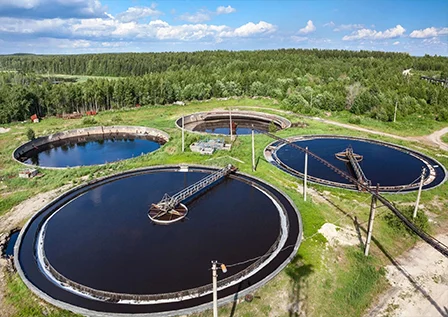
Fish Farming
Fish production ponds are polluted by the accumulation of fish droppings and uneaten food.
This pollution increases the risk of fish infection, causes weight loss and therefore a loss of the yield of the farm.
SOLUTION AGROMER: MARINE LIMESTONE + MICRO ORGANISMS
The solution will:
- Better digestion of organic matter by promoting oxygenation and pH regulation.
- a decrease in the ammonia content
- a reduction of the risks of bacterial contamination
- a reduction in COD
- a reduction of nitrite
- a reduction of free CO2 in the environment
- reduce the development of microalgae
- regulate the mineral ion content
- will complex unwanted heavy metals

Water treatment: frequently asked questions
What does Agromer’s water treatment do?
It uses microorganisms to reduce pollution in the food industry, septic tanks and slurry, waste composting, and ponds, lakes and canals.
Can it treat soil polluted by heavy metals?
Yes. The treatment is used for soil remediation of soils polluted by lead, cadmium, nickel, copper and mercury.
How does it help fish farms?
Agromer combines marine limestone with microorganisms. This improves digestion of organic matter by promoting oxygenation and pH regulation, lowers ammonia, nitrite, COD and free CO2, reduces bacterial contamination and microalgae, regulates mineral ions and complexes unwanted heavy metals.