Blood and bone fertilizer is an organic fertilizer made from dried blood and ground bone. The blood supplies nitrogen, and the bone supplies phosphorus and calcium, so together they make a gentle, slow-acting feed for vegetables, fruit, flowers and shrubs. Some products also add potash to make a more complete feed.
Agromer supplies blood and bone fertilizer in bulk to distributors, retailers and agricultural buyers.
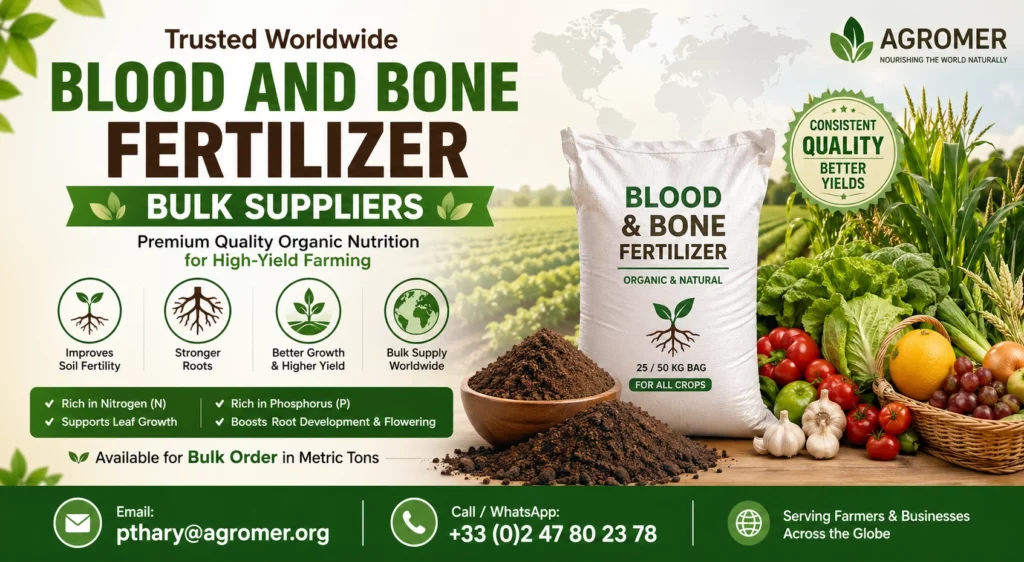
What is in blood and bone fertilizer?
| Ingredient | Main nutrients | Effect |
|---|---|---|
| Dried blood (blood meal) | Nitrogen | Leafy growth, faster acting |
| Bone meal | Phosphorus and calcium | Roots, flowering and fruiting, slow release |
| Added potash (in some products) | Potassium | Fruit quality and plant strength |
For the individual ingredients, see bone meal vs blood meal.
Uses
- Preparing beds before planting vegetables, flowers and shrubs
- Feeding fruit trees, roses and ornamental plants
- Organic and low-input growing
- Improving soil biology alongside compost
Rates depend on the product and crop, so follow the label. Work it into the soil and water it in.
How it is made
Blood and bones from regulated meat processing plants are heat-treated to destroy pathogens, then dried, ground and blended. In the EU, animal by-products used in fertilizers must be processed under the Animal By-Products Regulation, and many other countries have similar rules.
Quality and safety checks
- Guaranteed analysis: nitrogen, phosphate, potash and organic matter
- Processing: evidence of heat treatment and approval of the processing plant
- Microbiology: tests for Salmonella and other pathogens, as required
- Heavy metals: results against the limits in your market
- Organic farming approval: if you sell to certified organic growers
- Import permits: animal by-product fertilizers often need veterinary or import permits
Packaging
- Retail bags, for example 1 to 5 kg
- 25 kg bags for growers and nurseries
- Big bags for distributors and blenders
Requesting an offer
Agromer is an international commodity trader based in Saint-Avertin, France, since 1985. Send us the product type and analysis you need, quantity, packaging, destination and any import permit requirements. Specification and documents are confirmed in each offer. See also fish, blood and bone fertilizer and organic fertilizer brands.
Frequently asked questions
What is blood and bone fertilizer?
An organic fertilizer made from dried blood and ground bone, supplying nitrogen, phosphorus and calcium.
What is blood and bone fertilizer good for?
Preparing soil before planting and feeding vegetables, fruit, flowers and shrubs with a gentle, slow-acting feed.
Is blood and bone fertilizer organic?
It is made from natural materials. For certified organic farming, check that the product is approved by the relevant certification body.
Does blood and bone contain potassium?
Only in small amounts unless potash has been added. Check the label.
Is blood and bone safe?
Properly heat-treated products are safe to use. Wear gloves, avoid breathing dust and keep it away from pets.
Do I need a permit to import blood and bone fertilizer?
Often yes. Animal by-product fertilizers usually need veterinary or import permits. Check your country’s rules.