

There is no single best fertilizer for agriculture. The best fertilizer is the one that supplies what your soil is missing for the crop you are growing. For most field crops, that means a nitrogen source such as urea, plus phosphorus and potassium from DAP, MOP or an NPK, guided by a soil test. Organic matter such as manure or compost improves the soil underneath it all.
This guide shows which fertilizers suit the main crops, and how to choose between them.
The short answer by crop
| Crop | Commonly used fertilizers | Why |
|---|---|---|
| Rice | Urea, DAP, MOP | High nitrogen demand. Split urea doses through tillering and panicle start |
| Wheat | Urea, DAP or NPK | Nitrogen for tillers and grain protein, phosphorus at sowing |
| Maize (corn) | Urea, NPK, MOP | Heavy nitrogen feeder, needs potassium for strong stalks |
| Vegetables | Balanced NPK, compost | Mixed needs and short growing cycles |
| Fruit trees | Potash (MOP or SOP), NPK, organic matter | Potassium drives fruit size, colour and quality |
| Pulses and legumes | DAP or SSP, little nitrogen | They fix their own nitrogen but need phosphorus for roots |
| Sugarcane | Urea, NPK, MOP | Long season, high nitrogen and potassium removal |
Why a soil test comes first
Two farms growing the same crop can need very different fertilizers. A soil test shows:
- Which nutrients are low and which are already sufficient
- Soil pH, which affects how well plants take up nutrients
- Organic matter level
With that, you can avoid paying for nutrients you do not need and focus on the ones that limit yield.
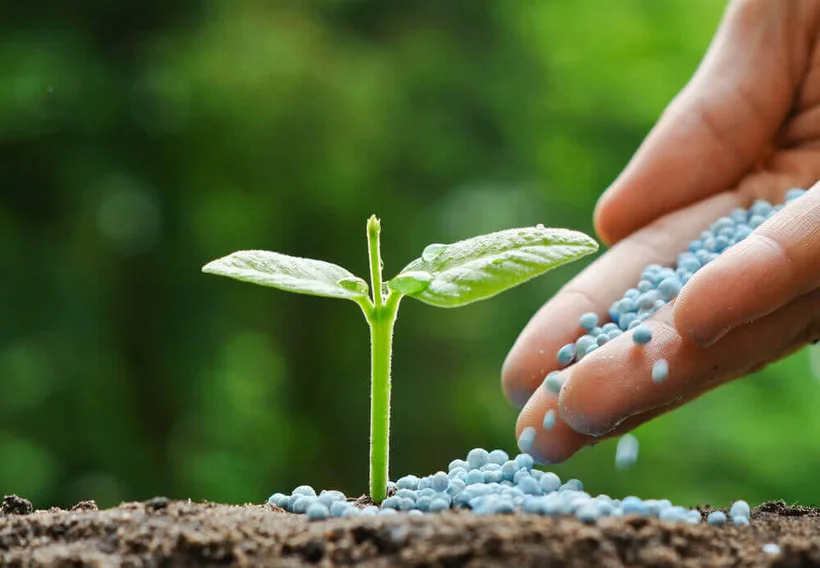
The main fertilizer options
Urea for nitrogen
Urea contains 46% nitrogen, the highest of any solid fertilizer, and is usually the cheapest source of nitrogen per kg. It is the backbone of cereal farming. See how to use urea as fertilizer.
DAP for phosphorus
DAP (18-46-0) supplies phosphorus and some nitrogen. It is widely used at sowing to establish roots. SSP (single superphosphate) also adds sulphur and calcium.
MOP and SOP for potassium
MOP (0-0-60) is the most common potassium fertilizer. SOP is used where crops are sensitive to chloride. See our guide to MOP fertilizer.
NPK for balanced feeding
NPK fertilizers supply all three main nutrients in one product. They are convenient for vegetables, fruit and mixed farming. See NPK fertilizer and NPK ratios.
Organic fertilizers for soil health
Manure, compost and green manure add organic matter, which helps soil hold water and nutrients. Their nutrient content is low and variable, so most commercial farms combine them with mineral fertilizers. See types of fertilizers for the full overview.
Organic or chemical: which is better?
They do different jobs. Mineral fertilizers give precise, fast nutrition and are needed for high yields. Organic fertilizers build long-term soil health. Combining the two, often called integrated nutrient management, usually gives the best result.
Five rules for using fertilizer well
- Right product: match the fertilizer to the nutrient that is short.
- Right rate: follow the soil test, not habit.
- Right time: apply nutrients when the crop needs them. Split nitrogen doses.
- Right place: work fertilizer into the soil or water it in. Keep it away from seed.
- Right storage: keep bags dry and covered to avoid caking.
Overuse wastes money and can harm soil and water, so more is not better.
Who are the major fertilizer producers?
The world’s largest fertilizer companies include Yara, Nutrien, Mosaic and CF Industries, alongside large state and private producers in China, India, Russia, the Middle East and North Africa. For urea specifically, see our list of urea fertilizer brand names.
Buying fertilizer in bulk
Agromer supplies urea, NPK and other fertilizers to importers, distributors and large buyers. We are the distributor for a major European NPK producer, including custom formulas, and trade urea with major producers on spot and contract terms. Tell us the product, grade, quantity, packaging and destination. See how to buy fertilizer in bulk and our fertilizer range.
Frequently asked questions
Which fertilizer is best for increasing crop yield?
The one that fixes the nutrient limiting your yield. For most cereals that is nitrogen, usually from urea, supported by phosphorus and potassium.
What is the most used fertilizer in the world?
Urea is the most widely used nitrogen fertilizer in the world, thanks to its high nitrogen content and low cost per kg of nitrogen.
How do I know which fertilizer my farm needs?
Test the soil. The results show which nutrients are low, so you can choose the right product and rate.
Can I mix organic and chemical fertilizers?
Yes. Using organic matter for soil health together with mineral fertilizers for precise nutrition is a common and effective approach.
Is too much fertilizer harmful?
Yes. Excess fertilizer can burn crops, waste money and pollute water. Follow soil test recommendations.
Do fertilizers expire?
Most mineral fertilizers do not expire if kept dry, but they can cake and become hard to spread. Organic products can lose quality faster.