
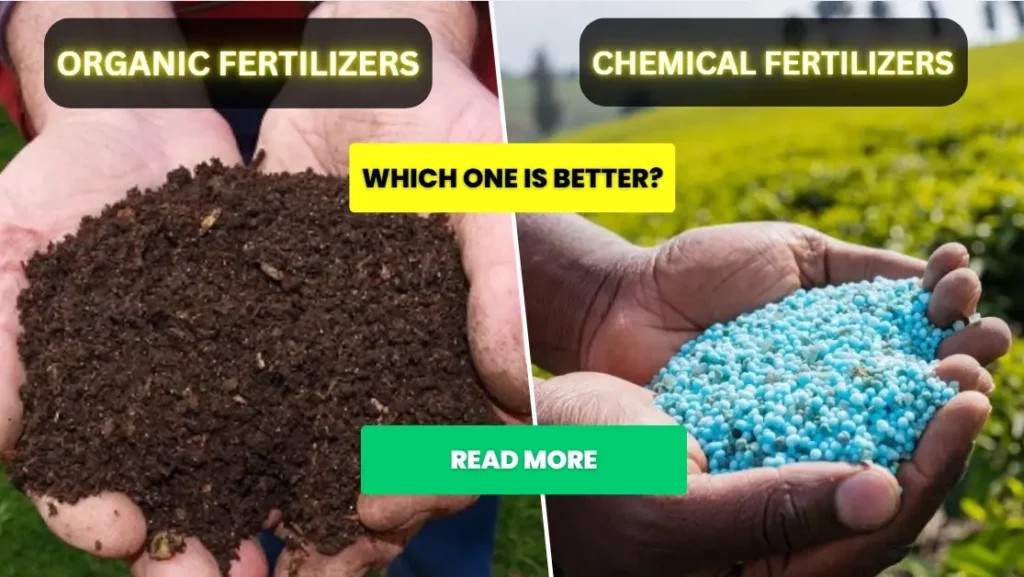
Organic fertilizers feed the soil; chemical fertilizers feed the crop. Organic fertilizers such as manure and compost release nutrients slowly and build soil health over years. Chemical (mineral) fertilizers such as urea, DAP and NPK deliver exact amounts of nutrients that plants can use within days. Neither is “better” in every case, and most productive farms use both.
Picture two fields. One gets compost every year: the soil is dark, crumbly and holds water well, but the crop needs time to respond. The other gets only mineral fertilizer: the crop responds fast, but over the years the soil loses organic matter. The best results usually come from combining the two.
What are organic fertilizers?
Organic fertilizers come from plant, animal or natural mineral sources. Common examples:
- Animal manure from cattle, poultry or horses
- Compost made from plant and food waste
- Bone meal and blood meal, rich in phosphorus and nitrogen respectively. See bone meal vs blood meal.
- Seaweed extracts and fish emulsion
- Green manure: crops grown to be dug back into the soil
They release nutrients as soil microbes break them down, so the effect is slow but long-lasting.
What are chemical fertilizers?
Chemical, synthetic or mineral fertilizers are produced industrially to supply nutrients in a concentrated, ready-to-use form. Common examples:
- Urea and ammonium nitrate for nitrogen
- DAP and superphosphate for phosphorus
- Muriate of potash (MOP) for potassium
- NPK compounds that combine all three
Read more in types of fertilizers and the top 3 fertilizers.
Organic vs chemical fertilizers compared
| Organic fertilizers | Chemical fertilizers | |
|---|---|---|
| Source | Plant, animal or natural materials | Manufactured or refined minerals |
| Nutrient content | Low and variable | High and precise |
| Speed | Slow, over weeks to months | Fast, often within days |
| Soil health | Builds organic matter and soil life | Does not add organic matter; overuse can acidify soil |
| Cost per kg of nutrient | Usually higher | Usually lower |
| Handling | Bulky, sometimes smelly | Compact and easy to spread |
| Environmental risk | Runoff if over-applied, but lower overall | Nitrate leaching and emissions if over-applied |
Pros and cons of organic fertilizers
Pros
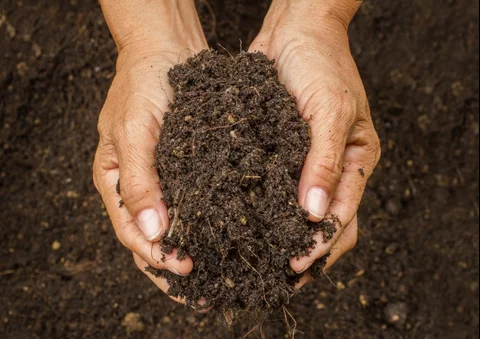
- Improve soil structure, water holding and microbial life
- Release nutrients slowly, so there is less risk of burning plants
- Recycle farm and food waste
- Allowed in certified organic farming (where approved)
Cons
- Low and variable nutrient content, so large amounts are needed
- Slow to act when a crop needs nutrients quickly
- Bulky and costly to transport
- Some, such as fresh manure, smell strongly
Pros and cons of chemical fertilizers
Pros
- High, known nutrient content, so you can apply exactly what the crop needs
- Fast results during critical growth stages
- Low cost per kilogram of nutrient
- Easy to store, transport and spread
Cons
- Add no organic matter to the soil
- Overuse can acidify soil and harm soil life
- Excess nitrogen and phosphorus can leach or run off into water
- Prices swing with energy and world markets. See the urea price guide.
Which should you choose?
It depends on what you need:
- Fast yield response in commercial farming: chemical fertilizers, applied according to a soil test.
- Long-term soil building: organic fertilizers, applied regularly.
- Certified organic production: approved organic inputs only.
- Most farms: a combination, known as integrated nutrient management. Organic matter builds the soil, and mineral fertilizer tops up what the crop needs at key stages.

Buying fertilizers in bulk
Agromer supplies mineral fertilizers such as urea, NPK, DAP and potash, as well as organic fertilizers, to importers and distributors. Send us the product, grade, quantity and destination port. See our bulk fertilizer range and organic fertilizer pages.
Frequently asked questions
Which fertilizer is better for long-term soil health?
Organic fertilizers, because they add organic matter that improves soil structure, water holding and soil life over time.
Can I mix organic and chemical fertilizers?
Yes. Combining them is common practice and often gives the best results: organic matter for the soil, mineral fertilizer for the crop’s peak needs.
Do organic fertilizers work as fast as chemical fertilizers?
No. Organic fertilizers must be broken down by soil microbes first, so they act over weeks or months rather than days.
Are chemical fertilizers harmful?
Used at the right rate, they are safe and effective. Overuse can acidify soil and pollute water, so apply them according to a soil test.
Is compost better than chemical fertilizer?
Compost is better for soil health, but it contains far less nutrient per kilogram, so it rarely meets a high-yield crop’s needs on its own.
Can organic fertilizers be used on all crops?
Yes, though the amount and timing need to match the crop, since nutrient content varies.