
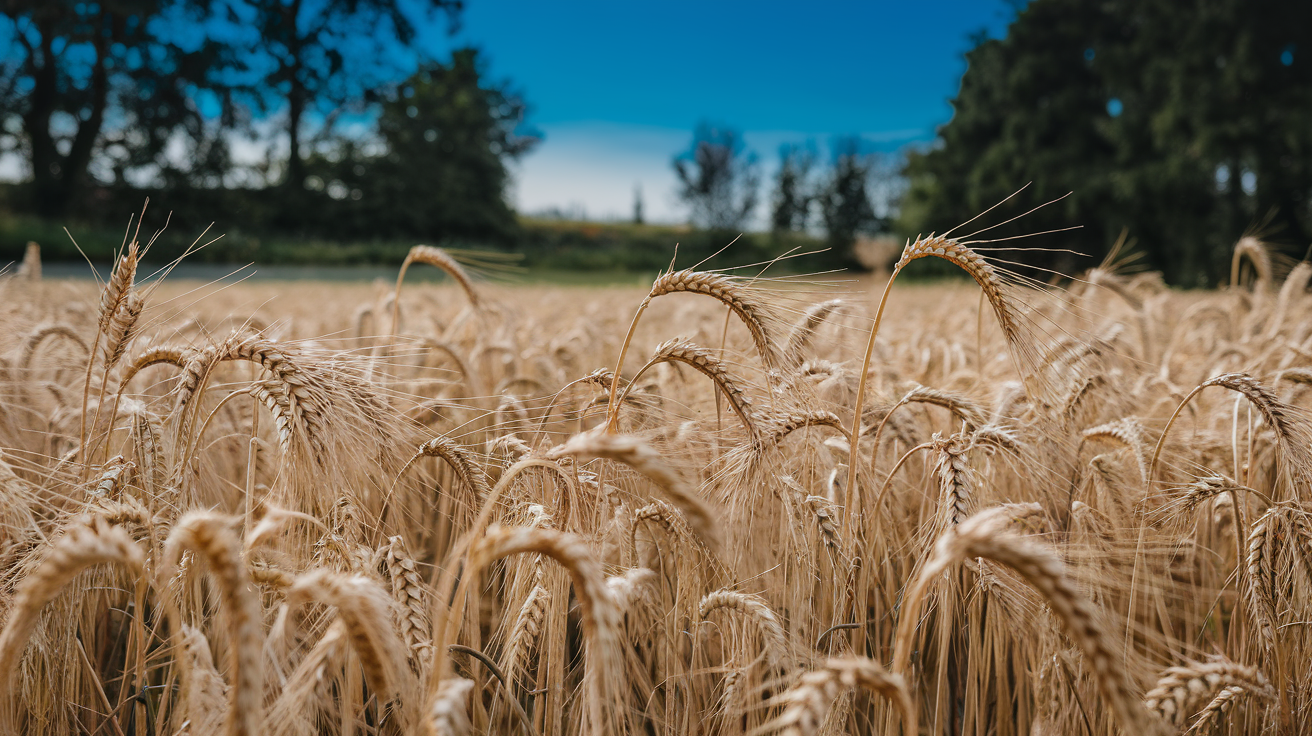
Buying wheat in bulk comes down to three choices: the type of wheat, the origin and the specification. Mills, food manufacturers and feed producers each need different wheat, and the right origin depends on price, freight and quality on the day. Agromer handles wheat enquiries for importers and processors, with each offer confirmed against your specification, packaging and destination.
This guide explains what to specify, where wheat comes from, and how a bulk purchase works.

Types of wheat buyers ask for
| Type | Typical protein | Main uses |
|---|---|---|
| Hard milling wheat | About 12% to 14% or more | Bread and high-quality flour |
| Standard milling wheat | About 11% to 12.5% | General flour, flatbreads, noodles |
| Soft wheat | Lower protein | Biscuits, cakes, pastries |
| Durum wheat | High protein, hard grain | Pasta, semolina, couscous |
| Feed wheat | Not a milling grade | Poultry and livestock feed. See animal feed wheat |
Key specifications
| Parameter | Why it matters |
|---|---|
| Protein | Sets flour type and bread quality |
| Moisture | Usually 12% to 14% maximum; higher risks spoilage |
| Test weight | Indicates how well the grain filled, linked to flour yield |
| Falling number | Detects sprout damage, which ruins baking quality |
| Wet gluten | Dough strength |
| Foreign matter, damaged and broken grains | Cleaning losses and flour yield |
| Insects and contaminants | Food safety; usually nil live insects |
Milling wheat 12.5% protein: our specification
This is the specification we work with for milling wheat with 12.5% protein, of USA and Canada origin. Every limit below goes into the contract and is checked by SGS before shipment.
| Parameter | Limit |
|---|---|
| Protein | 12.5% minimum, on a 12% moisture basis |
| Moisture | 13% maximum |
| Falling number | 250 seconds minimum |
| Dry gluten | 8% minimum, on a 12% moisture basis |
| Gluten index | 75% minimum |
| Test weight | 77 kg/hl minimum |
| Extraneous matter (after removal of ergot) | 1.5% maximum, of which organic 1.1% and inorganic 0.4% maximum |
| Harmful and/or toxic matter | 0.4% maximum |
| Ergot | 0.03% maximum |
| Broken grains | 4% maximum |
| Shrivelled (shrunken) grains | 3% maximum |
| Immature grains | 0.5% maximum |
| Black point grains | 3% maximum |
| Other cereals | 1.7% maximum |
| Grains attacked by pests | 1.7% maximum |
| Sunn pest damaged | 0.8% maximum |
| Unsound grains | 0.8% maximum: heat damaged 0.2%, mould grains (excluding fusarium) 0.6% |
| Total impurities | 10% maximum |
| Dockage | 1.0% maximum |
| Commercial terms | |
|---|---|
| Origin | USA and Canada |
| Minimum quantity | 50,000 MT |
| Packaging | Bulk or 50 kg PP bags |
| Inspection | Pre-shipment inspection by SGS |
| Delivery | ASWP (any safe world port) |
Main exporting origins
| Origin | Known for |
|---|---|
| Russia and the Black Sea | Competitively priced milling wheat, often 12.5% protein. See Russian wheat |
| European Union | Milling wheat, mainly from France, Germany and Romania |
| Canada | High-protein spring wheat and durum. See Canadian wheat |
| Australia | Clean, white wheat for noodles and flour. See Australian wheat |
| United States | Several classes, from hard red winter to soft white |
| Argentina and Kazakhstan | Regional suppliers with growing exports |
The wheat market in 2026
- FAO forecasts world wheat production of 813.9 million tonnes in 2026.
- USDA projects 2026/27 production of 822 million tonnes against consumption of 828 million tonnes, with ending stocks of 276 million tonnes, as reported by U.S. Wheat Associates.
- The World Bank benchmark for US hard red winter wheat averaged $243.30 per tonne in 2025 and was $347 per tonne in September 2026.
When consumption runs ahead of production, stocks fall and prices tend to firm. Freight, currency and Black Sea shipping risk also move delivered prices.
How a bulk wheat purchase works
- Specification: wheat type, origin preference and all quality limits.
- Quantity and timing: per shipment and per year, with the shipment period.
- Terms: FOB, CFR or CIF, and bulk vessel or containers.
- Contract: price, quality limits, inspection and payment.
- Inspection: independent sampling and analysis at loading.
- Documents: invoice, bill of lading, certificate of origin, phytosanitary certificate, quality and weight certificates.
Packaging and shipping
- Bulk vessels for mills and large importers
- Containers with bagged or loose wheat for smaller volumes
- Bags: 25 kg or 50 kg PP bags, or big bags, when required
Why buyers work with Agromer
Agromer has been an international commodity trader since 1985, based in Saint-Avertin, France. For wheat:
- Specifications are written into the contract
- Cargoes are inspected by SGS at loading
- Payment is by 100% DLC or SBLC
For buyers in the Gulf, see wheat supply in the UAE. See also our range of agricultural commodities.
Frequently asked questions
Which country is the largest wheat exporter?
Russia has been the largest wheat exporter in recent seasons, followed by the EU, Canada, Australia and the US.
What protein wheat do I need for bread flour?
Bread flour usually needs milling wheat of about 12% protein or more. Your miller’s specification decides the exact level.
What is the difference between milling wheat and feed wheat?
Milling wheat meets protein, gluten and falling number limits for flour. Feed wheat does not and is used for animal feed.
How is wheat shipped?
Large volumes travel in bulk vessels. Smaller volumes go in containers, loose or in bags.
What documents come with a wheat shipment?
Usually an invoice, bill of lading, certificate of origin, phytosanitary certificate, and independent quality and weight certificates.
What is your 12.5% protein wheat specification?
Milling wheat of USA and Canada origin with 12.5% minimum protein on a 12% moisture basis, 13% maximum moisture, a falling number of at least 250 seconds, a gluten index of at least 75% and a test weight of at least 77 kg/hl. The minimum order is 50,000 MT, in bulk or 50 kg PP bags, with SGS pre-shipment inspection.
What is the wheat price per tonne?
It depends on origin, protein and freight. The US hard red winter wheat benchmark was $347 per tonne in September 2026, according to the World Bank.