
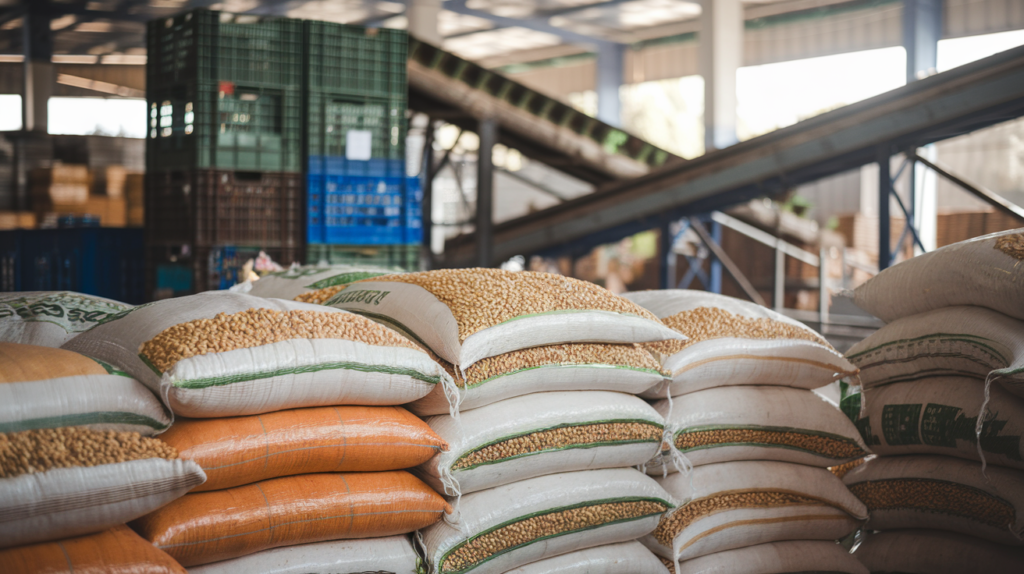
Australia is one of the world’s leading wheat exporters, and most of its crop is sold abroad. It produced 34.1 million tonnes of wheat in 2024, up from 28.0 million tonnes in 2023, according to FAO data. Australian wheat is known for being clean, dry and white, which makes it a favourite with flour and noodle millers in Asia and the Middle East.
This guide covers the Australian wheat classes, where the wheat is grown and shipped, and what importers should specify.

Australian wheat at a glance
| Detail | |
|---|---|
| Production 2024 | 34.1 Mt (FAO) |
| Production 2023 | 28.0 Mt (FAO) |
| Main growing states | Western Australia, New South Wales, South Australia, Victoria, Queensland |
| Harvest | Roughly October to January |
| Main export ports | Kwinana, Albany, Geraldton and Esperance in the west; Port Kembla, Newcastle, Geelong, Melbourne, Port Adelaide and others in the east and south |
| Main buyers | Indonesia, China, the Philippines, Vietnam, South Korea, Japan, and Middle Eastern markets |
Australian wheat classes
Australian wheat is sold by class, based on protein and end use:
| Class | Typical use |
|---|---|
| APH (Australian Prime Hard) | High-protein bread and noodle flour |
| AH (Australian Hard) | Bread and noodle flour |
| APW (Australian Premium White) | Noodles, flatbreads and general-purpose flour |
| ASW (Australian Standard White) | Noodles, flatbreads, general flour |
| ASFT (Australian Soft) | Biscuits, cakes and pastries |
| ADR (Australian Durum) | Pasta and couscous |
| Feed | Animal feed |
Who handles Australian wheat exports?
Most Australian wheat moves through large bulk handlers and exporters, including CBH Group in Western Australia, GrainCorp on the east coast and Viterra in South Australia, plus international grain trading companies. Importers usually buy through these exporters or through traders.
What affects Australian wheat prices
- Rainfall. Drought can cut the crop sharply, as in some recent seasons.
- The Australian dollar. A weaker currency makes exports more competitive.
- Competition. Black Sea, EU, Canadian and Argentine wheat compete in Asian and Middle Eastern markets.
- Freight. Australia’s closeness to Southeast Asia is a cost advantage there.
For reference, the World Bank benchmark for US hard red winter wheat averaged $243.30 per tonne in 2025 and was $347 per tonne in September 2026.
How to import Australian wheat
- Choose the class and set the specification: protein, moisture, test weight, falling number and screenings.
- Agree the terms: FOB at an Australian port, or CFR or CIF to your port.
- Plan the timing: most new-crop wheat ships from December to June.
- Arrange inspection by an independent inspector at loading.
- Prepare the documents: contract, invoice, bill of lading, certificate of origin, phytosanitary certificate and quality and weight certificates.
For wheat in the Gulf, see wheat supply in the UAE.
Wheat through Agromer
Agromer is an international commodity trader based in France since 1985. We handle wheat enquiries from mills, food manufacturers and traders. The origin, class and terms are confirmed in each offer. Send us the wheat type, specification, quantity, packaging and destination port. See our guide to buying wheat in bulk.
Frequently asked questions
How much wheat does Australia produce?
34.1 million tonnes in 2024 and 28.0 million tonnes in 2023, according to FAO data.
What is Australian wheat known for?
It is clean, dry and white, with classes suited to noodles, bread, flatbreads and biscuits.
What is APW wheat?
Australian Premium White, a mid-protein class widely used for noodles and general-purpose flour.
Who buys Australian wheat?
Mainly buyers in Asia, including Indonesia, China, the Philippines, Vietnam, South Korea and Japan, plus the Middle East.
When is Australian wheat harvested?
Roughly from October to January, with most exports shipped from December to June.
Which state grows the most wheat in Australia?
Western Australia is usually the largest producing and exporting state.