
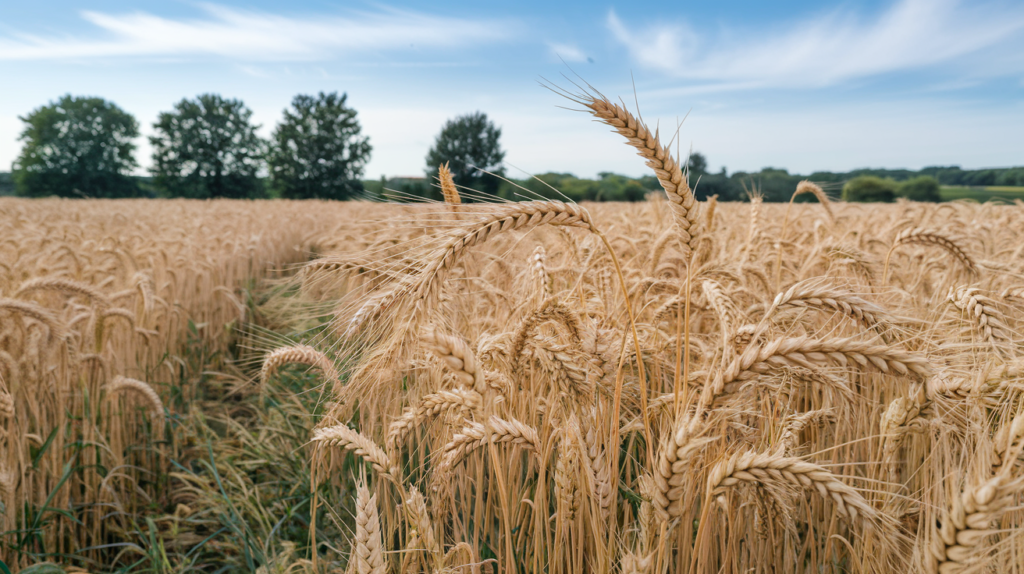
Russia is the world’s largest wheat exporter. It grew 82.6 million tonnes of wheat in 2024, down from a record 92.8 million tonnes in 2023, according to FAO data. Most of its exports leave through Black Sea ports for Egypt, Turkey and many buyers across the Middle East, Africa and Asia.
Russian wheat is popular because it is competitively priced and close to many importing regions. Buying it, though, needs extra care with export rules, payments and compliance.

Russian wheat at a glance
| Detail | |
|---|---|
| Production 2024 | 82.6 Mt (FAO) |
| Production 2023 | 92.8 Mt (FAO) |
| Main growing areas | Southern Russia (Krasnodar, Rostov, Stavropol), the Volga region, Siberia |
| Main export ports | Novorossiysk and other Black Sea and Azov ports |
| Main export type | Winter milling wheat, usually 12.5% or 11.5% protein |
| Main buyers | Egypt, Turkey and other Middle Eastern, African and Asian importers |
For the global picture, see wheat producing countries.
Main Russian export grades
- Milling wheat 12.5% protein: the benchmark Russian export grade, widely used for bread flour
- Milling wheat 11.5% protein: a lower-protein milling grade
- Durum wheat: smaller volumes, for pasta and semolina
- Feed wheat: lower specification wheat for animal feed. See animal feed wheat
A typical contract also sets limits for moisture, test weight, falling number, gluten, foreign matter and damaged grains. Agree every limit in writing and have it checked by an independent inspector at loading.
What affects Russian wheat prices
- The harvest. Weather in southern Russia moves prices. The 2024 crop was smaller after frost and drought.
- Export duty and quotas. Russia applies a floating export duty on wheat and sets seasonal export quotas, which change how much is offered abroad and at what price.
- Black Sea shipping. Shipping risk and insurance costs feed through to delivered prices. FAO expects lower shipments from Russia and Ukraine in 2026 because of constrained Black Sea shipping routes.
- The rouble. A weaker rouble makes Russian wheat cheaper in dollar terms.
- World markets. Competition from the EU, Australia, Canada, Argentina and Kazakhstan.
For reference, the World Bank benchmark for US hard red winter wheat was $347 per tonne in September 2026. Russian 12.5% wheat usually trades at a discount to US wheat.
Compliance: what importers must check
Food and agricultural products are largely exempt from Western sanctions on Russia, but banking, shipping insurance and certain companies and ports can still be restricted. Before you buy:
- Screen the seller, the vessel and the banks against the sanctions lists that apply to you
- Confirm that your bank can process the payment
- Check that the vessel and insurance meet your country’s rules
- Get legal advice if you are unsure
Documents for a Russian wheat shipment
- Contract, commercial invoice and packing list
- Bill of lading
- Certificate of origin
- Phytosanitary certificate
- Quality and weight certificates from an independent inspector
- Fumigation certificate, where required by the destination
How to buy Russian wheat
- Define the specification: grade, protein and all quality limits.
- Choose the terms: FOB at a Black Sea port, or CFR or CIF to your port.
- Check compliance on the seller, vessel, payment route and insurance.
- Agree inspection at loading.
- Secure the payment with a documentary letter of credit or similar instrument.
Wheat through Agromer
Agromer is an international commodity trader based in France since 1985. We handle wheat enquiries from mills, food manufacturers and traders. The origin, specification and terms are confirmed in each offer, subject to compliance checks. Send us the wheat type, specification, quantity, packaging and destination port. See our guide to buying wheat in bulk.
Frequently asked questions
How much wheat does Russia produce?
82.6 million tonnes in 2024 and 92.8 million tonnes in 2023, according to FAO data.
Is Russia the largest wheat exporter?
Yes. Russia has been the world’s largest wheat exporter in recent seasons.
Who buys the most Russian wheat?
Egypt and Turkey are among the largest buyers, along with many countries in the Middle East, Africa and Asia.
What is Russian 12.5% wheat?
The benchmark Russian export milling wheat, with a minimum of 12.5% protein. It is widely used for bread flour.
Can I legally import Russian wheat?
In many countries, yes. Food is largely exempt from Western sanctions, but you must check the seller, vessel, payment and insurance against the rules that apply to you.
Why is Russian wheat cheaper?
Large harvests, low production costs, nearby markets and a weaker rouble usually make it competitive, although export duties and shipping risk add cost.