
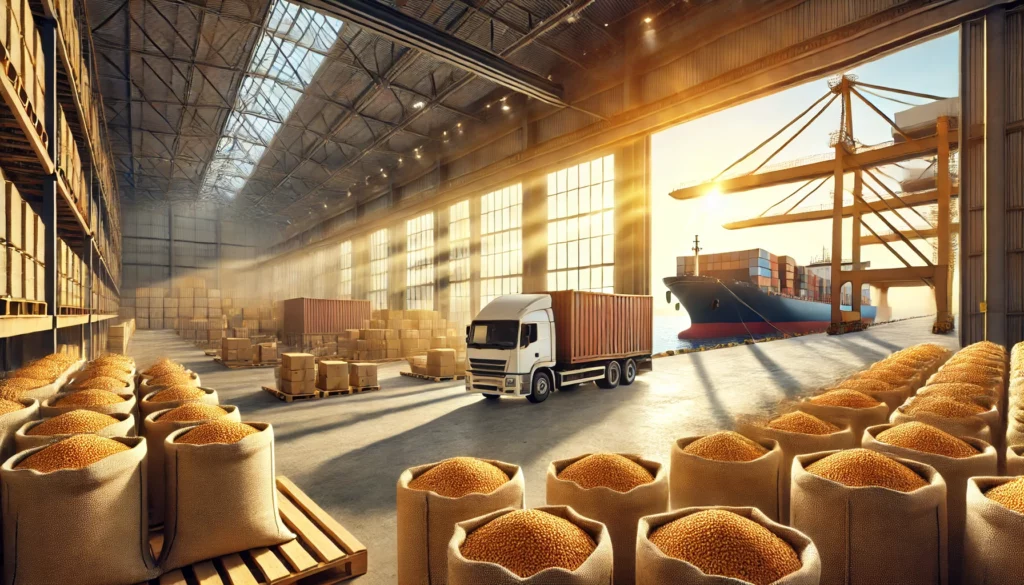
Feed wheat is wheat that does not meet milling standards, or is bought specifically for animal feed. It is an energy-rich grain with more protein than corn, which makes it a common ingredient in poultry, pig and cattle rations, especially in Europe, Australia and the Black Sea region. Feed mills choose between wheat, corn and barley largely on price per unit of energy and protein.
Agromer handles feed wheat enquiries for feed mills, integrators and traders, with each offer confirmed against your specification and destination.

Feed wheat vs corn
| Feed wheat | Corn (maize) | |
|---|---|---|
| Protein | Usually higher, often about 10% to 13% | Lower, often about 8% to 9% |
| Energy | High | Slightly higher |
| Fibre (NSP) | Higher; enzymes often added for poultry and pigs | Lower |
| Pigment | None | Yellow pigment for yolk and skin colour |
Many feed mills switch between wheat and corn as prices change. For corn, see yellow corn for animal feed.
How feed wheat is used
Poultry
Wheat is widely used in broiler and layer diets. Its non-starch polysaccharides can make gut contents sticky, so feed mills usually add a xylanase enzyme. Because wheat lacks yellow pigment, layer diets based on wheat may need added pigment for yolk colour. Some producers also feed whole wheat alongside a balanced feed.
Pigs
Wheat is a good energy and protein source for pigs. It is usually ground and pelleted, and enzymes help digestion.
Cattle and sheep
Wheat ferments quickly in the rumen. Introduced slowly and kept to a moderate share of the diet, it is a useful energy source. Too much, too fast, can cause acidosis, so rations should be balanced by a nutritionist.
Specifications to agree
| Parameter | Why it matters |
|---|---|
| Moisture | Usually 13% to 14% maximum, to prevent mould in storage |
| Protein | Affects the value in the ration |
| Test weight | Indicates grain fill and energy |
| Foreign matter and broken grains | Cleaning losses and feed value |
| Mycotoxins | DON, zearalenone and aflatoxin must meet the limits in your market |
| Insects | Usually nil live insects |
Mycotoxins are the main quality risk with feed wheat, especially after wet harvests. Always ask for test results and check them against the feed safety rules in your country.
Main origins
Feed wheat is widely available from the Black Sea region, the European Union, Australia, Argentina and Canada. Availability changes each season, depending on how much of the crop misses milling grade. See wheat producing countries and our guide to buying wheat in bulk.
Packaging and shipping
- Bulk vessels for feed mills and large importers
- Containers, loose or bagged, for smaller volumes
- 25 kg or 50 kg bags, or big bags, where required
Buying feed wheat through Agromer
Agromer is an international commodity trader based in France since 1985. We work with SGS inspection at loading and payment by 100% DLC or SBLC. Send us the specification, quantity, packaging and destination port, and we will check what we can offer. See also our range of agricultural commodities.
Frequently asked questions
What is feed wheat?
Wheat used for animal feed, usually because it does not meet milling standards for protein, falling number or other limits.
Is wheat better than corn for chickens?
Wheat has more protein, while corn has slightly more energy and yellow pigment. Both work well in balanced diets. Wheat diets usually include an enzyme.
Can cattle eat wheat?
Yes, in moderation and introduced gradually. Too much wheat at once can cause acidosis.
What are the main risks with feed wheat?
Mycotoxins, high moisture and insect damage. Test each lot and agree limits in the contract.
Why do feed mills add enzymes to wheat diets?
Wheat contains non-starch polysaccharides that poultry and pigs digest poorly. Enzymes such as xylanase break them down and improve performance.
Where does feed wheat come from?
Mainly the Black Sea region, the EU, Australia, Argentina and Canada, depending on the season.