
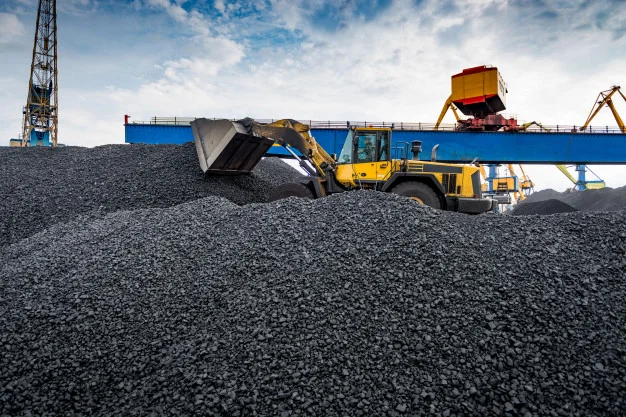
Coal is still one of the world’s main energy sources. Global coal demand reached about 8.84 billion tonnes in 2025, and the IEA expects about 8.94 billion tonnes in 2026. Coal generates around a third of the world’s electricity and remains essential for steel and cement, even as renewables grow quickly.
The market is now heavily concentrated in Asia, and prices are closely tied to gas and oil. This guide explains who uses coal, who supplies it, and what is shaping the market in 2026.

Coal demand: where it is used
| Region | Role |
|---|---|
| China | Uses more than half of the world’s coal, mainly for power and industry; also the largest producer |
| India | Second-largest consumer, with demand rising with electricity use |
| Southeast Asia | Fast-growing demand, led by Indonesia, Vietnam and the Philippines |
| Japan, South Korea, Taiwan | Large importers of high-quality thermal and coking coal |
| Europe and North America | Demand in long-term decline as coal plants close |
What coal is used for
- Electricity: the largest use. Coal plants provide around a third of global power.
- Steel: coking coal is turned into coke for blast furnaces. See coal in steel production.
- Cement: kilns burn thermal coal for heat.
- Other industry: chemicals, paper, food processing and industrial boilers.
Coal trade: who supplies the world
Only a fraction of the world’s coal is traded internationally. Most is burned in the country where it is mined. Seaborne thermal coal demand is projected at about 1,062 million tonnes in 2026, down slightly from about 1,074 million tonnes in 2025.
| Exporter | Thermal coal exports 2025 |
|---|---|
| Indonesia | 517 Mt |
| Australia | 209 Mt, plus about 142 Mt of metallurgical coal |
| Russia | About 130 Mt |
| Colombia | 45 Mt |
See top coal exporting countries for more detail.
What is moving the market in 2026
- Gas and oil prices. European gas averaged $11.96 per MMBtu in 2025 but reached $25.42 in September 2026, and Brent crude was $116.80 a barrel in September, according to the World Bank. Expensive gas makes coal more competitive for power generation.
- Coal prices. Australian Newcastle coal averaged $108.40 per tonne in 2025 and reached $147.10 in September 2026.
- Indonesian supply. Production fell to 790 Mt in 2025, and the IEA expects exports to decline again in 2026.
- Supply disruptions. Colombia’s Cerrejón mine declared force majeure on 1 June 2026.
- China’s imports. Higher domestic output and more coal from Mongolia reduce China’s seaborne purchases.
- The energy transition. Rapid growth in solar and wind is limiting coal’s growth in many markets, even where coal use remains high.
For the effect on business costs, see how coal prices affect your industry.
Coal and the environment
Coal has the highest CO2 emissions per unit of energy of the major fossil fuels, and it releases SO2, NOx and particulates. Most countries have set emissions targets that will reduce coal use over time, and many plants now use advanced pollution controls. See the environmental impact of coal.
What it means for coal buyers
- Secure supply: with exporters cutting volumes and disruptions possible, consider term contracts and a second origin.
- Watch the price index: agree in advance which index your contract follows.
- Buy on energy, not tonnes: compare delivered cost per unit of energy.
See how to secure a reliable coal supply chain.
Buying Indonesian coal through Agromer
Agromer holds mandates for Indonesian thermal coal for power plants and industrial buyers. We work with an end-buyer LOI, payment by 100% DLC or SBLC, and SGS inspection at loading. Send us your specification, monthly quantity, contract length and discharge port. See our Indonesian coal supply page.
Frequently asked questions
How much coal does the world use?
About 8.84 billion tonnes in 2025, with about 8.94 billion tonnes forecast for 2026, according to the IEA.
Which country uses the most coal?
China, which uses more than half of the world’s coal.
What share of electricity comes from coal?
Around a third of global electricity generation.
Which country exports the most coal?
Indonesia is the largest exporter of thermal coal. Australia leads in metallurgical coal.
Why did coal prices rise in 2026?
Higher gas and oil prices, lower Indonesian exports and supply disruptions such as the Cerrejón force majeure all supported prices.
Is coal demand falling?
Not globally yet. Demand is falling in Europe and North America but rising in parts of Asia, so world demand remains close to record levels.