
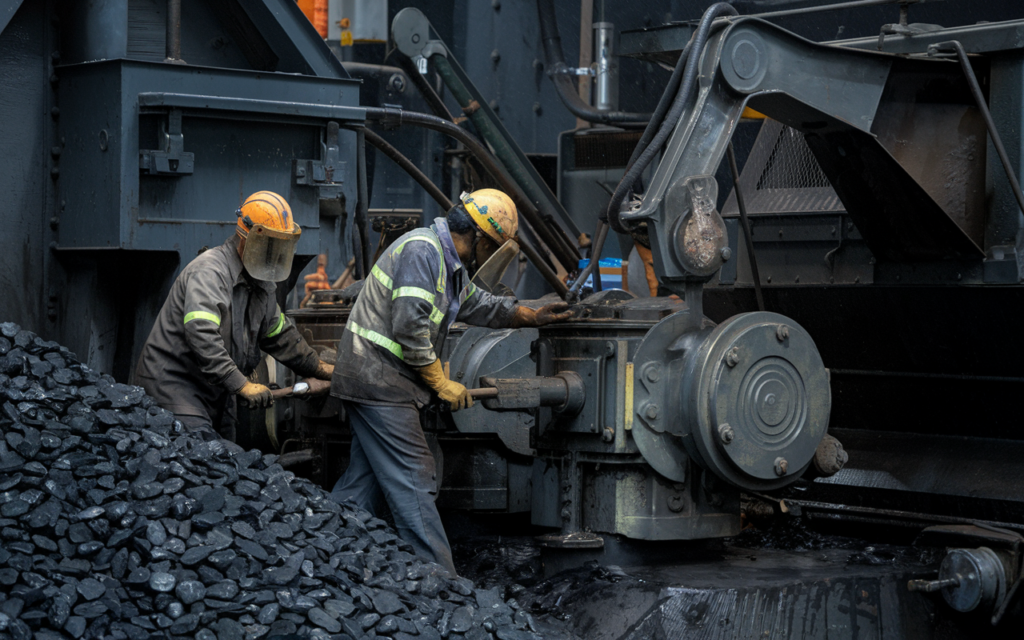
In a blast furnace steelworks, coal quality goes straight into the cost and quality of the steel. High-grade coking coal makes strong, clean coke, which keeps the furnace running smoothly, lowers the amount of coke needed per tonne of iron and keeps impurities out of the metal. Poor coal does the opposite: more slag, more fuel, more disruption.
This guide explains which coal properties matter to a steel plant and why.

How a steel plant uses coal
- Coke making: coking coal is heated without air in coke ovens to make coke, the fuel, reducing agent and structural support of the blast furnace.
- Pulverised coal injection (PCI): ground coal is blown into the furnace to replace part of the coke.
- Sintering: coal or coke fines fuel the sinter plant that prepares iron ore.
- Power and steam: many integrated plants also burn thermal coal in their own power plants and boilers.
For how coking coal and anthracite compare, see anthracite vs bituminous for steelmaking.
The coal properties that matter
| Property | Why it matters in steelmaking |
|---|---|
| Ash | Ash ends up as slag. More ash means more coke and flux per tonne of iron, and less output |
| Sulphur | Sulphur passes into the hot metal and must be removed later at extra cost |
| Phosphorus | Makes steel brittle and is hard to remove |
| Coke strength (CSR) | Strong coke keeps the furnace permeable and stable |
| Coke reactivity (CRI) | Lower reactivity usually means less coke lost inside the furnace |
| Volatile matter and fluidity | Decide how well the coal forms coke and how much coke it yields |
| Moisture | Adds weight and energy cost in coke ovens |
What high-grade coal delivers
- Lower coke rate: strong, low-ash coke means less coke per tonne of hot metal
- Higher productivity: a stable, permeable furnace produces more iron
- Cleaner metal: less sulphur and phosphorus to remove downstream
- Fewer disruptions: consistent coal means consistent coke and fewer furnace upsets
Cheaper, lower-grade coal can cost more overall once the extra coke, flux, slag and lost output are counted.
Consistency matters as much as quality
Coke ovens and blast furnaces are tuned to a coal blend. Sudden changes in ash, volatile matter or fluidity force operators to adjust and can cut output. Long-term contracts with clear specifications and independent inspection help keep the blend stable. See best practices for sourcing coal for steel.
Where steel plants buy coking coal
Australia is the largest exporter of coking coal, exporting about 142 million tonnes of metallurgical coal in 2025 according to the IEA. The US, Canada, Russia and Mongolia are other major sources. See top coal exporting countries.
Thermal coal for steelworks power and boilers
Agromer holds mandates for Indonesian thermal coal, which is used in power plants, boilers and kilns rather than as coking coal. If your steelworks runs its own power plant or boilers, send us your specification, monthly quantity, contract length and discharge port. We work with an end-buyer LOI, payment by 100% DLC or SBLC, and SGS inspection at loading. See our Indonesian coal supply page.
Frequently asked questions
Why do steel plants need high-grade coal?
Because coal quality decides coke quality, which controls blast furnace efficiency, fuel use and the purity of the iron.
What is coking coal?
Bituminous coal that softens and fuses when heated without air, forming the strong, porous coke used in blast furnaces.
What does ash do in a blast furnace?
It forms slag, which needs extra coke and flux to melt and reduces the furnace’s output.
What is CSR?
Coke strength after reaction, a test showing how well coke keeps its strength inside the furnace. Higher is better.
Can thermal coal be used to make steel?
Not for coke. Thermal coal is used for power, steam and some processes such as coal-based direct reduced iron.
Which country exports the most coking coal?
Australia, followed by the US, Canada, Russia and Mongolia.