
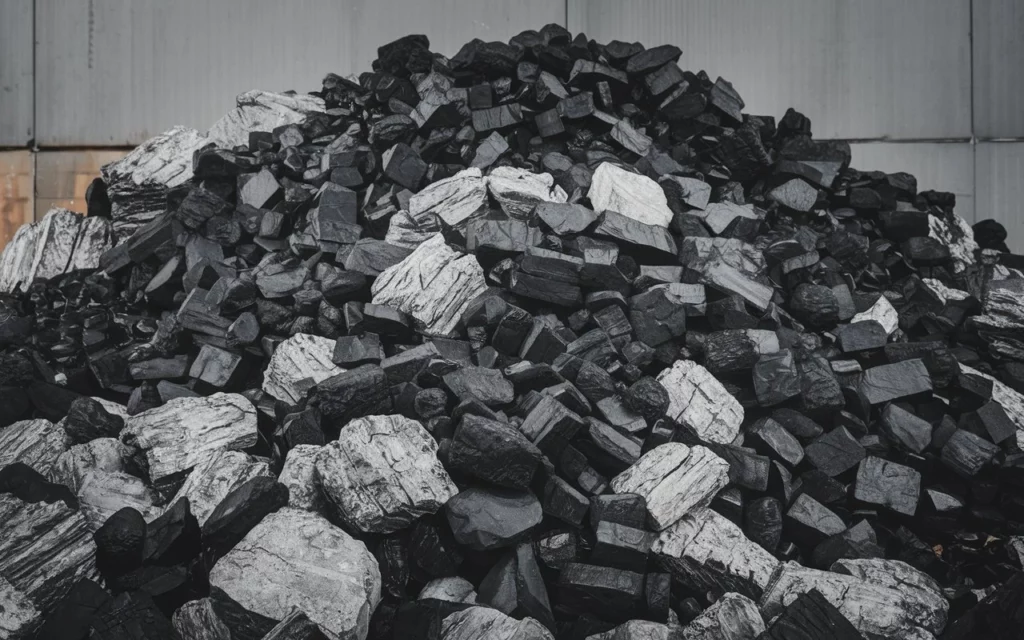
You cannot judge coal quality by eye. Two cargoes that look the same can differ widely in energy, moisture, ash and sulphur, and those differences decide what you really pay per unit of heat and whether your boiler runs well. The only reliable way is a written specification, proper sampling and laboratory analysis by an independent inspector.
This guide walks through what to specify, what each figure means, and how to check it before and after loading.

Step 1: Start from your equipment
Ask your boiler, kiln or furnace supplier for the design coal range. It tells you the calorific value, moisture, ash, sulphur, volatile matter and grindability your plant can handle. Buying outside that range costs efficiency, even if the coal is cheaper.
Step 2: Know the key parameters
| Parameter | What it tells you | Why it matters |
|---|---|---|
| Calorific value (CV) | Energy per kg | Sets how much coal you burn and what you pay per unit of energy |
| Total moisture (TM) | Water in the coal as delivered | Lowers useful energy, adds freight weight |
| Ash | Mineral matter left after burning | Wear, ash handling costs and efficiency |
| Total sulphur | Sulphur content | SO2 emissions and corrosion |
| Volatile matter | Gases released on heating | Ignition and flame stability |
| Fixed carbon | Carbon left after volatiles | Burnout and heat release |
| Hardgrove Grindability Index (HGI) | How easily coal grinds | Mill capacity in pulverised-coal boilers |
| Ash fusion temperature | When the ash softens and melts | Slagging and fouling in the boiler |
| Size distribution | Lump and fines content | Handling, storage and feeding |
See coal grades explained for how these vary between lignite, sub-bituminous, bituminous and anthracite.
Step 3: Get the basis right
The same coal has different numbers depending on the basis:
- AR (as received): includes all the moisture in the coal as delivered
- ADB (air-dried basis): after drying in air, used for many lab results
- DB (dry basis): with all moisture removed
- GAR and NAR: gross and net calorific value as received. NAR is lower because it subtracts energy lost to evaporating water
A 4,200 kcal/kg GAR coal is not the same as a 4,200 kcal/kg NAR coal. Make sure the contract states the basis for every parameter.
Step 4: Write a clear specification
For each parameter, set a typical value, a rejection limit and, where useful, a price adjustment for deviations. For example, the price can move up or down with the actual CV, with penalties for ash or sulphur above the typical value and the right to reject above a hard limit.
Step 5: Ask for evidence before you sign
- Recent analysis reports from the same mine or stockpile
- The name of the mine and loading port
- History of shipments to similar buyers, where available
Treat a single, perfect-looking certificate with caution. Consistency over several shipments matters more.
Step 6: Sample and test at loading
- Appoint an independent inspector, such as SGS, at the loading port
- Sampling should follow recognised standards such as ISO 13909 or ASTM D2234, taken across the whole loading, not from the top of a stockpile
- The inspector issues certificates of sampling and analysis, and of weight, usually by draft survey
For large or new contracts, many buyers also test at discharge, and agree in the contract which result is final.
Step 7: Check the cost per unit of energy
Once you have the specification, compare offers on delivered cost per unit of energy:
Delivered price per tonne ÷ net calorific value = cost per unit of energy
A cheaper coal with low CV and high moisture may cost more per useful kcal once freight and handling are included.
Common warning signs
- A specification with only “typical” values and no rejection limits
- CV quoted without a basis
- Unwillingness to accept independent inspection
- A price far below the relevant index for the grade
- Pressure to pay before inspection documents are available
Buying Indonesian coal through Agromer
Agromer holds mandates for Indonesian thermal coal for power plants and industrial buyers. Every cargo is inspected by SGS at loading, and we work with an end-buyer LOI and payment by 100% DLC or SBLC. Send us your specification, monthly quantity, contract length and discharge port. See our Indonesian coal supply page and Indonesian coal prices.
Frequently asked questions
What is the most important coal quality parameter?
Calorific value, because it decides how much energy you get. But moisture, ash and sulphur must also fit your equipment and emission limits.
What is the difference between GAR and NAR?
GAR is gross calorific value as received. NAR is net calorific value as received, which subtracts energy used to evaporate water. NAR is always lower.
How is coal quality tested?
An independent inspector takes samples throughout loading to a recognised standard, prepares them and tests them in a laboratory.
What is proximate analysis of coal?
A standard test that measures moisture, ash, volatile matter and fixed carbon.
What is HGI?
The Hardgrove Grindability Index shows how easily coal can be ground. It matters for plants that burn pulverised coal.
Who should inspect the coal?
An independent, internationally recognised inspection company, such as SGS, appointed under the contract.