
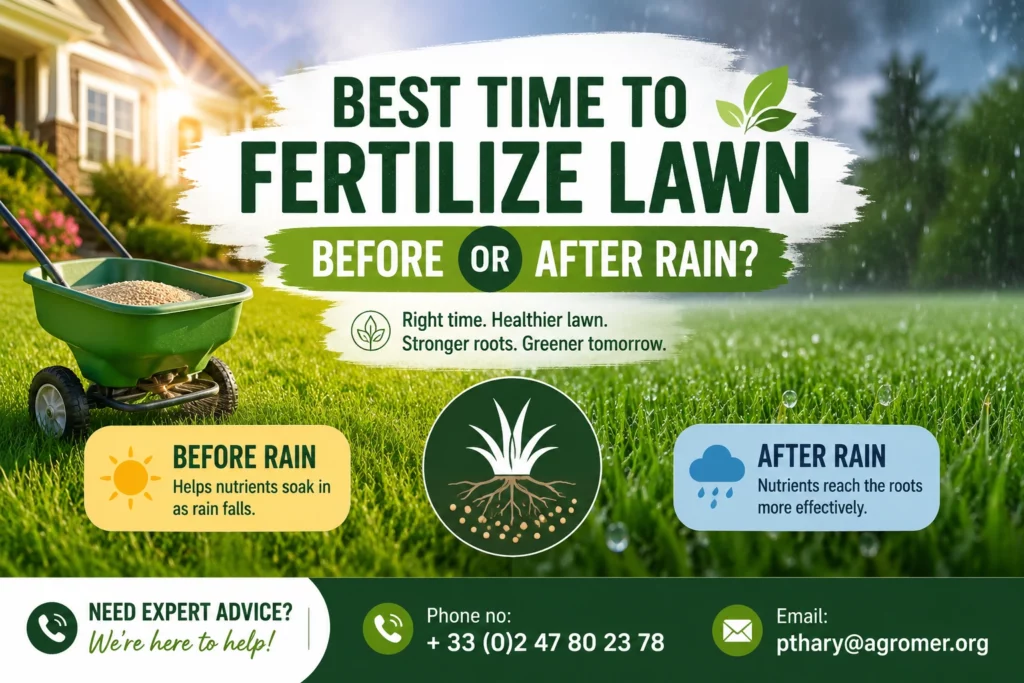
Learn the best time to fertilize lawn before or after rain for healthy grass growth, better nutrient absorption, and long-lasting lawn results.
Do you need Top & Best Fertilizer for Plants Supplier, Dealer, Exporter & Manufacturer.
Need help in sourcing best fertilizer for hosta palnts as per your needs, then feel free to get touch with us.
Phone no: + 33 (0)2 47 80 23 78
Email: pthary@agromer.org
A green, thick, and healthy lawn does not happen by chance. Timing plays a major role, especially when applying fertilizer. One of the most common questions homeowners, landscapers, and turf managers ask is: should you fertilize your lawn before or after rain? The answer can directly affect nutrient absorption, grass growth, soil health, and even fertilizer waste.
Rain can either help your lawn fertilizer work better or wash away valuable nutrients before the grass gets a chance to absorb them. Understanding the best time to fertilize lawn before or after rain helps protect your investment and keeps your lawn healthy throughout the growing season.
At Agromer, we work closely with agricultural professionals, lawn care businesses, and growers worldwide to provide high-quality fertilizer solutions designed for better crop and turf performance. Whether you manage a home garden, sports turf, commercial landscape, or agricultural field, choosing the right fertilizer timing can make a noticeable difference.
Why Lawn Fertilizer Timing Matters
Fertilizer provides essential nutrients like nitrogen, phosphorus, and potassium that grass needs for strong root development and healthy growth. But even the best lawn fertilizer may fail if applied at the wrong time.
Applying fertilizer during heavy rainfall can lead to:
- Nutrient runoff
- Uneven feeding
- Soil erosion
- Burned grass patches
- Water contamination
On the other hand, applying fertilizer under ideal moisture conditions helps:
- Improve nutrient absorption
- Strengthen root systems
- Encourage greener grass
- Reduce fertilizer waste
- Support long-term soil fertility
The best lawn fertilization strategy depends on rain intensity, soil condition, fertilizer type, and climate.
Should You Fertilize Lawn Before or After Rain?
In most cases, the best time to fertilize lawn is before light rain or after moderate rainfall when the soil is moist but not soaked.
Light rain helps dissolve fertilizer granules and move nutrients into the soil. However, heavy rain immediately after application can wash fertilizer away before the roots absorb it.
Fertilizing Before Rain
Applying fertilizer before a light rain shower can be beneficial because moisture helps nutrients enter the root zone naturally.
Best conditions include:
- Light rain forecast within 24 hours
- Dry grass blades
- Moist but not waterlogged soil
- Slow-release fertilizer application
Avoid fertilizing before:
- Thunderstorms
- Heavy downpours
- Flooding conditions
- Strong winds
Heavy rainfall may cause nitrogen runoff and nutrient leaching, especially in sandy soils.
Benefits of Fertilizing Before Light Rain
Better Nutrient Activation
Moisture activates fertilizer granules and helps nutrients move into the soil profile where roots can access them.
Reduced Need for Manual Watering
A gentle rain can replace irrigation, saving water and labor costs.
Faster Grass Recovery
Lawns recovering from heat stress, drought, or foot traffic often respond quickly when fertilizer is followed by light rainfall.
Improved Nutrient Distribution
Even moisture helps fertilizer spread more uniformly across the lawn.
Fertilizing Lawn After Rain
Many lawn experts prefer fertilizing after rainfall because the soil is already moist, making nutrient absorption easier.
The key is waiting until:
- Standing water disappears
- Grass blades dry slightly
- Soil becomes workable
- Excess runoff risk decreases
Applying fertilizer to saturated soil can create nutrient loss and root stress.
Advantages of Fertilizing After Rain
- Moist soil improves root uptake
- Lower risk of fertilizer burn
- Easier fertilizer breakdown
- Reduced drought stress on grass
This method works especially well with granular fertilizers and organic lawn fertilizers.
Best Weather Conditions for Lawn Fertilization
For ideal lawn feeding results, look for:
| Condition | Ideal Range |
|---|---|
| Temperature | 15°C to 29°C |
| Rainfall | Light rain or drizzle |
| Soil Moisture | Slightly moist |
| Wind | Calm conditions |
| Grass Condition | Dry leaf surface |
Avoid fertilizing during extreme heat or prolonged rainfall.
Understanding Different Lawn Fertilizer Types
Different fertilizer formulations react differently to rain.
Granular Fertilizer
Granular lawn fertilizer benefits from light watering or rainfall after application. It slowly dissolves into the soil.
Best for:
- Residential lawns
- Sports fields
- Large turf areas
Liquid Fertilizer
Liquid fertilizers absorb quickly but should not be applied before heavy rain because nutrients can wash away rapidly.
Best for:
- Fast greening
- Correcting nutrient deficiencies
- Quick lawn recovery
Slow-Release Fertilizer
Slow-release fertilizers provide nutrients over time and are safer around variable weather conditions.
Best for:
- Long-term feeding
- Consistent growth
- Reduced fertilizer applications
Organic Lawn Fertilizer
Organic fertilizers improve soil structure while feeding grass naturally.
Best for:
- Eco-friendly lawn care
- Sustainable landscaping
- Soil microbial activity
About Agromer
Agromer is committed to supporting modern agriculture and turf management with reliable fertilizer products, sustainable nutrient solutions, and practical agronomic knowledge.
Our Mission
To help growers, landscapers, and agricultural businesses improve productivity through effective and environmentally responsible fertilizer solutions.
Our Vision
To become a trusted global partner in agriculture by promoting healthier soil, stronger crops, and smarter nutrient management practices.
What Agromer Does
Agromer supplies quality fertilizer products for:
- Agriculture
- Lawn care
- Horticulture
- Turf management
- Landscaping
- Commercial farming
Our solutions are designed to support nutrient efficiency, plant health, and sustainable growth across different climates and soil types.
Global Lawn Care and Turf Industry Trends
The lawn care and turf management industry continues to grow worldwide due to increasing demand for:
- Residential landscaping
- Sports turf maintenance
- Golf course management
- Urban green spaces
- Sustainable lawn solutions
Countries across North America, Europe, Asia, and the Middle East are investing heavily in turf improvement and efficient fertilizer practices.
Industry Challenges
Some common lawn care challenges include:
- Unpredictable rainfall
- Nutrient leaching
- Soil degradation
- Water shortages
- Rising fertilizer costs
Modern fertilizer technologies and better application timing help address these issues effectively.
Step-by-Step Guide: How to Fertilize Lawn Properly Around Rain
Step 1: Check the Weather Forecast
Look for light rain predictions within 12–24 hours. Avoid storms or heavy rainfall alerts.
Step 2: Choose the Right Fertilizer
Select fertilizer based on:
- Grass type
- Season
- Soil condition
- Lawn size
Slow-release fertilizers are often safer during changing weather.
Step 3: Prepare the Lawn
Mow the grass lightly and remove debris before application.
Step 4: Apply Evenly
Use a spreader for uniform fertilizer distribution.
Step 5: Allow Light Watering or Rainfall
Light moisture helps nutrients move into the soil without runoff.
Step 6: Avoid Overwatering
Too much water can wash nutrients away and damage roots.
Common Lawn Fertilization Mistakes to Avoid
Applying Before Heavy Rain
This is one of the biggest causes of fertilizer loss and environmental runoff.
Fertilizing Dry, Stressed Grass
Extremely dry lawns may experience fertilizer burn.
Using Excess Fertilizer
Overfeeding grass can weaken roots and increase disease risk.
Ignoring Soil Testing
Soil tests help determine nutrient deficiencies and prevent unnecessary applications.
Best Practices for Healthier Lawn Growth
Water Deeply but Infrequently
Encourage deeper root growth instead of shallow rooting.
Use Seasonal Fertilization
Different seasons require different nutrient ratios.
Aerate Compacted Soil
Better airflow improves nutrient absorption.
Apply Fertilizer at Recommended Rates
Following label instructions prevents nutrient imbalance.
Choose Quality Fertilizer Products
Reliable fertilizer formulations improve consistency and long-term lawn performance.
Real-World Applications of Lawn Fertilizer Timing
Proper fertilizer timing is important in many industries:
Residential Lawn Care
Homeowners use seasonal feeding schedules for greener lawns and weed resistance.
Sports Turf Management
Athletic fields require consistent nutrient management for durability and appearance.
Golf Courses
Precision fertilization improves turf quality and reduces patchy growth.
Commercial Landscaping
Hotels, offices, and public spaces rely on healthy lawns to improve property appeal.
Sod Farming
Sod growers depend on controlled fertilizer timing for faster turf establishment.
Why Choose Agromer Fertilizer Solutions
Choosing Agromer means working with a company that understands real agricultural and turf management challenges.
Quality-Focused Products
Our fertilizer solutions are designed for reliable nutrient performance.
Industry Knowledge
We support customers with practical fertilizer guidance and agronomic insights.
Sustainable Approach
Agromer promotes efficient fertilizer use that supports healthier soil and reduced nutrient waste.
Global Reach
We work with customers across international agricultural and landscaping markets.
Also read about what are the top 3 fertilizers.
Final Thoughts
Knowing the best time to fertilize lawn before or after rain can significantly improve lawn health, nutrient efficiency, and long-term turf quality. Light rain after fertilization is often ideal because it helps nutrients move into the soil naturally. Heavy rainfall, however, can cause runoff and nutrient loss.
The key is balance. Monitor weather forecasts, choose the right fertilizer type, and avoid extreme moisture conditions. With proper timing and quality fertilizer products, your lawn can stay greener, stronger, and healthier throughout the year.
At Agromer, we believe successful lawn and agricultural management starts with smarter nutrient practices. Our commitment to quality fertilizer solutions and sustainable growth helps customers achieve better results in every season.
Frequently Asked Questions
What is the best time to fertilize lawn before or after rain?
The best time is usually before light rain or after rain when the soil is moist but not saturated. This helps nutrients absorb properly.
Can heavy rain wash away lawn fertilizer?
Yes. Heavy rainfall can cause fertilizer runoff and nutrient loss before roots absorb the nutrients.
Should I water lawn fertilizer after application?
Yes, most granular fertilizers benefit from light watering or rainfall after application to activate nutrients.
Is it okay to fertilize wet grass?
Avoid applying fertilizer to extremely wet grass because granules may stick unevenly and increase burn risk.
Which fertilizer works best during rainy seasons?
Slow-release lawn fertilizers generally perform better because they release nutrients gradually and reduce runoff risk.
How often should I fertilize my lawn?
Most lawns benefit from fertilization 2–4 times per year depending on grass type, climate, and soil condition.
Does organic lawn fertilizer work better in rainy weather?
Organic fertilizers often improve soil health and may reduce nutrient loss, but proper timing is still important for best results.
Get in touch with us
Need help sourcing the best fertilizer for your plants and learning the ideal time to fertilize your lawn? Our experts are here to guide you with the right solutions tailored to your needs. Feel free to get in touch with us anytime.
Phone: +33 (0)2 47 80 23 78
Email: pthary@agromer.org