
The best fertilizer for tobacco is a balanced, low-chloride mix that is high in potassium and moderate in nitrogen. Potassium should come from sulphate of potash (SOP) or potassium nitrate rather than muriate of potash (MOP), because chloride hurts how the leaf cures and burns.
Tobacco is unusual. With most crops, more fertilizer means a bigger harvest. With tobacco, what you sell is leaf quality, so the wrong fertilizer can ruin a good-looking crop. Too much nitrogen gives big leaves that cure poorly. Too much chloride makes leaves that burn badly. This guide explains how to get the balance right.
What tobacco needs
- Potassium (K): the most important nutrient for tobacco. It improves leaf burn, elasticity, colour and disease resistance.
- Nitrogen (N): drives leaf growth, but excess delays ripening and lowers curing quality.
- Phosphorus (P): supports roots and early growth.
- Calcium, magnesium and sulphur: strong cell walls, healthy green colour and protein formation.
- Micronutrients: boron, zinc and manganese in small amounts.
Recommended NPK ratio for tobacco
Ratios vary by tobacco type, soil and region, so follow your local recommendation and soil test. As examples:
| Situation | Typical guidance |
|---|---|
| Flue-cured (Virginia) tobacco, North Carolina | 50 to 80 lb N per acre (about 56 to 90 kg/ha): higher on sandy soils, lower on clay |
| Burley tobacco, Kentucky | Generally 150 to 275 lb N per acre (about 168 to 308 kg/ha), depending on soil and previous crop |
| General guide in some Indian recommendations | About 100 kg N, 50 kg P2O5 and 100 kg K2O per hectare |
| Chloride | No more than 20 to 25 lb Cl per acre from fertilizer (NC State) |
| Potassium source | SOP or potassium nitrate, not MOP |
| Soil pH | Around 5.8 to 6.2, adjusted with lime or dolomite if too acidic |
Why chloride is a problem
Tobacco takes up chloride readily. Leaves high in chloride stay moist, cure unevenly and burn poorly, which buyers notice straight away. NC State Extension notes that chlorine becomes toxic to tobacco above about 30 lb per acre, and recommends that fertilizers supply no more than 20 to 25 lb of chlorine per acre. In Kentucky, fertilizers sold for tobacco must carry a maximum chlorine guarantee of no more than 50 lb per acre. That is why tobacco growers pay more for SOP than MOP. Learn more in MOP fertilizer and potash vs potassium.
Where urea fits
Urea (46% nitrogen) can supply part of the crop’s nitrogen, but it needs care with tobacco:
- Apply it in split doses, mostly in the early growth stage.
- Stop nitrogen well before topping, so leaves can ripen properly.
- Many tobacco programmes also use nitrate forms, such as potassium nitrate or calcium nitrate, which suit the crop well.
See how to use urea as fertilizer for application basics.
Fertilizer by growth stage
- Transplanting: a balanced starter with phosphorus for roots.
- Early growth: most of the nitrogen and potassium, often in two splits.
- Before topping: finish nitrogen applications; keep potassium adequate.
- Ripening and harvest: no more nitrogen, so leaves ripen and cure evenly.
Signs of nutrient deficiency
| Nutrient | Typical sign |
|---|---|
| Nitrogen | Pale or yellow lower leaves |
| Phosphorus | Slow growth, dark or purplish leaves |
| Potassium | Scorched, curled leaf edges and poor burn quality |
| Magnesium | Yellowing between veins on lower leaves |
| Boron | Deformed or curled young leaves |
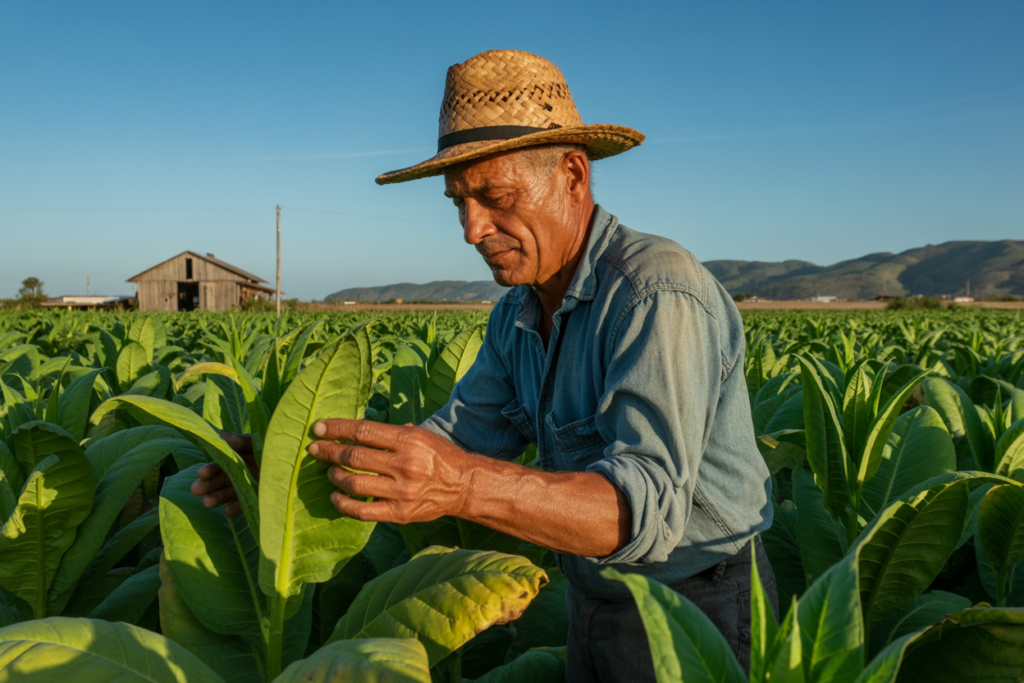
Organic and mineral fertilizers together
Composted manure and green manure improve soil structure and water holding, while mineral fertilizers supply exact nutrients when the crop needs them. Most growers combine both. Compare them in organic vs chemical fertilizers.
Buying fertilizers for tobacco in bulk
Agromer supplies NPK compounds, including custom formulas from a major European NPK factory, as well as urea and potash, to importers and distributors. Tell us the grade, the chloride limit, quantity and destination. See our NPK fertilizer and bulk fertilizer pages.
Frequently asked questions
Which fertilizer is best for tobacco?
A balanced, low-chloride fertilizer with high potassium and moderate nitrogen. Potassium should come from SOP or potassium nitrate rather than MOP.
How much nitrogen does tobacco need?
It depends on the type. NC State Extension recommends 50 to 80 lb N per acre for flue-cured tobacco, while University of Kentucky guidance for burley generally runs from 150 to 275 lb N per acre. Soil texture and the previous crop shift the rate.
Is urea good for tobacco?
Urea can supply part of the nitrogen, applied in split doses early in the season. Too much, or too late, lowers leaf curing quality.
Why is MOP not recommended for tobacco?
MOP contains chloride. Chloride in tobacco leaves hurts curing and makes them burn poorly, so growers use SOP or potassium nitrate instead.
What soil pH does tobacco prefer?
Around 5.8 to 6.2 for flue-cured tobacco. Lime or dolomite can raise the pH of soils that are too acidic.
Can I use organic fertilizer on tobacco?
Yes. Composted manure improves the soil, but it should be combined with mineral fertilizers to meet the crop’s exact needs.
When should I stop fertilizing tobacco?
Finish nitrogen applications before topping, so the leaves can ripen and cure evenly.