
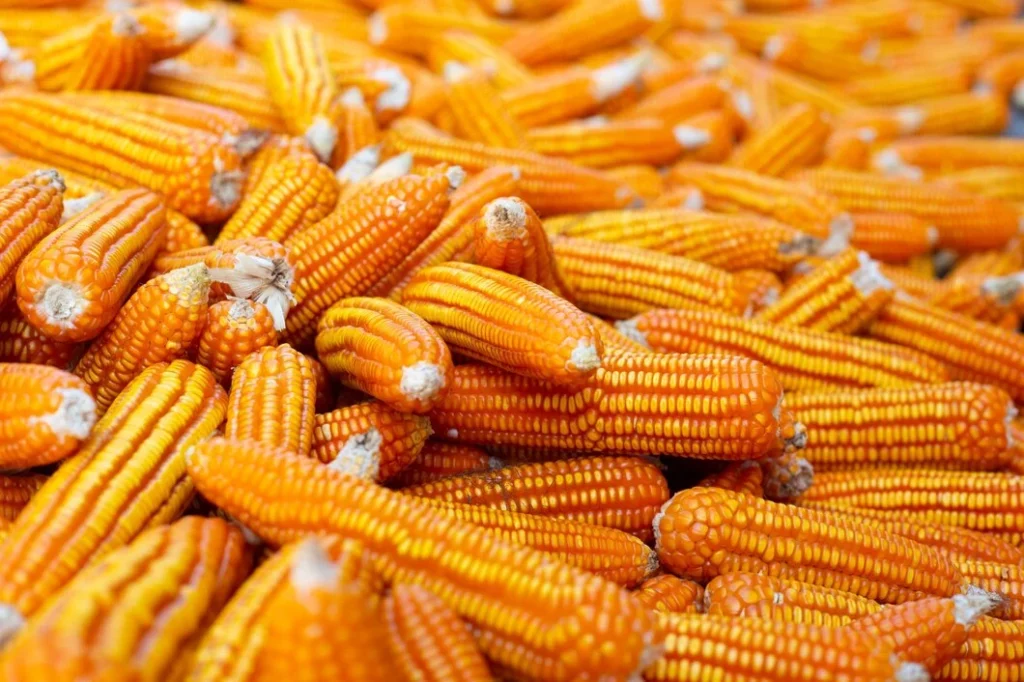
Yellow corn, also called maize, is the most widely used energy grain in animal feed. It is rich in starch, easy to digest and usually cheaper than other grains per unit of energy. That is why it forms the base of most poultry and pig feeds and a large part of many cattle rations.
Corn is not a complete feed on its own. It is high in energy but low in protein, so it is always balanced with protein sources such as soybean meal, plus vitamins and minerals. This guide covers how corn is used for each type of livestock, what a typical feed-grade specification looks like, and what to check when you buy in bulk.
What corn brings to a feed ration
A typical feed-grade yellow corn contains roughly:
- Starch: 70 to 75%, the main energy source
- Protein: 7 to 9%
- Oil: 3 to 4%
- Fibre: 2 to 3%
Yellow corn also contains natural pigments that give egg yolks and broiler skin their yellow colour, which many markets prefer.

Corn for poultry
Corn is the main grain in most chicken feeds because it is highly digestible and full of energy. In commercial feeds it is ground and mixed with protein, minerals and vitamins. For backyard flocks, cracked or whole corn is a popular treat.
For laying hens, energy from corn supports steady production, while the yellow pigments improve yolk colour. For broilers, it helps fast, efficient growth when the ration has enough protein. Read more in can chickens eat corn and our guide to yellow corn for chicken feed.
Corn for cattle and dairy cows
Corn is a key energy source in beef and dairy rations. It helps beef cattle gain weight and supports milk production in dairy cows. How it is processed matters:
- Whole corn: can be fed to some cattle, but more passes through undigested
- Cracked or ground corn: easier to digest
- Steam-flaked corn: the most digestible, common in feedlots
Too much corn too fast can cause acidosis and bloat. Introduce it gradually and always feed it with enough forage.

Corn for sheep and goats
Sheep and goats can use corn as an energy boost, for example for finishing lambs or for dairy goats in milk. The same rules apply as for cattle: feed it in moderation, mix it with forage, and change rations slowly to avoid digestive upsets.
Corn for deer
Corn is often used to feed deer in winter or as an attractant. Wildlife experts warn that deer can suffer acidosis if they suddenly eat large amounts of corn, especially when their natural diet is mostly browse. If you feed deer, introduce corn slowly, keep amounts small and never use mouldy corn.
Typical feed-grade yellow corn specification
| Parameter | Typical value |
|---|---|
| Product | Yellow corn (Zea mays), feed grade |
| Moisture | 14% maximum |
| Protein | 7 to 9% |
| Oil | 3 to 4% |
| Starch | 70 to 75% |
| Broken kernels | 5% maximum |
| Foreign matter | 2% maximum |
| Aflatoxin | Commonly 20 ppb maximum, the EU limit for feed materials |
| Packaging | Bulk vessel, containers in bulk or bags, jumbo bags |
| HS code | 1005.90 |
Corn prices in 2026
The World Bank benchmark for US No. 2 yellow corn (FOB US Gulf) averaged $203.20 per tonne in 2025. It rose through 2026 to an average of $239.60 per tonne in September. Delivered prices depend on origin, freight and the specification. For other grains, see animal feed wheat.
Buying yellow corn in bulk
Agromer trades yellow corn for feed manufacturers, livestock producers and grain importers. A complete enquiry helps us reply faster. Include:
- Specification (moisture, protein, aflatoxin and broken kernel limits)
- Quantity and shipment period
- Preferred origin, if any
- Packaging and destination port
- Delivery terms, such as FOB or CIF
We recommend independent inspection, for example by SGS, before loading. Browse our agricultural commodities.
Frequently asked questions
Is corn suitable for all livestock?
Yes. Corn is safe for poultry, pigs, cattle, sheep, goats and deer, but the amount and processing differ by animal, and it must be balanced with protein and minerals.
What is the main benefit of corn in animal feed?
Energy. Corn is rich in digestible starch, which supports growth, milk production and egg laying at a lower cost than most other grains.
How should corn be processed for livestock?
Cracking, grinding or steam-flaking improve digestibility. Poultry feeds use ground corn; feedlot cattle often get steam-flaked corn.
Can too much corn harm animals?
Yes. Large or sudden amounts can cause acidosis and bloat in cattle, sheep, goats and deer. Introduce corn gradually and feed it with forage.
How should corn be stored?
Keep it cool, dry and well ventilated, and below about 14% moisture, to prevent mould and aflatoxin.