
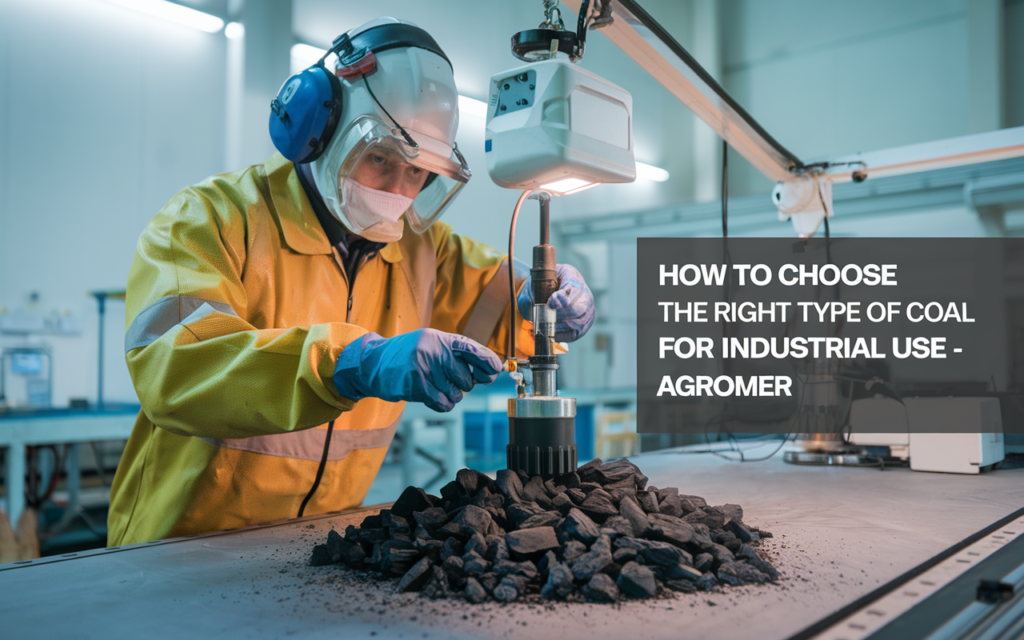
The right coal for your plant is the one your equipment was designed to burn, at the lowest delivered cost per unit of energy. Industrial boilers, cement kilns, brick kilns and steel furnaces each need different coal properties. Picking coal on price per tonne alone often leads to lower efficiency, more maintenance and higher real costs.
Here is a practical way to choose.

Step 1: Know your equipment’s coal range
Ask your equipment supplier or engineering team for the design coal: the range of calorific value, moisture, ash, volatile matter, sulphur, grindability and ash fusion temperature the plant can handle. This is your starting specification.
Step 2: Match the coal to the application
| Application | Usually needs | Watch out for |
|---|---|---|
| Industrial boilers | Steady CV, moderate volatile matter, suitable size | High ash and fines; low ash fusion temperature |
| Power plants | CV matched to the boiler, good grindability (HGI) | Moisture, ash, sulphur |
| Cement kilns | Good CV, consistent ash chemistry | Sulphur and chlorine |
| Brick and ceramic kilns | Reliable CV and size | Variability between cargoes |
| Steel blast furnaces | Coking coal and PCI coal | Ash, sulphur, phosphorus, coke strength |
| Coal-based DRI | Non-coking coal with suitable reactivity | Ash and ash fusion |
For coal ranks, see coal grades explained. For steel, see anthracite vs bituminous.
Step 3: Check the key properties
- Calorific value and its basis (GAR, NAR or ADB)
- Total moisture: lowers useful energy and adds freight weight
- Ash: wear, slagging and disposal costs
- Volatile matter: ignition and flame stability
- Sulphur: emissions and corrosion. See low-sulphur coal
- HGI: mill performance for pulverised coal
- Ash fusion temperature: slagging risk
- Size: handling and feeding
See how to assess coal quality.
Step 4: Compare delivered cost per unit of energy
Delivered price per tonne ÷ net calorific value = cost per unit of energy
A low-CV coal may look cheap per tonne but cost more per unit of heat once freight and handling are added. Factor in ash disposal and maintenance too.
Step 5: Test before you switch
Trial a new coal on one unit or in a limited quantity, and watch efficiency, emissions and ash behaviour before committing to large volumes.
Step 6: Secure consistent supply
A coal that suits your plant is only useful if every cargo matches. Use contracts with typical values, rejection limits and independent inspection. See how to secure a reliable coal supply chain.
Buying Indonesian thermal coal through Agromer
Agromer holds mandates for Indonesian thermal coal for power plants and industrial buyers. Indonesian coal is typically low in ash and sulphur and comes in grades from about 3,400 to 6,500 kcal/kg GAR. Send us your equipment’s coal range, monthly quantity, contract length and discharge port. See Indonesian coal and our Indonesian coal supply page.
Frequently asked questions
What type of coal is best for industrial use?
The coal your equipment is designed for. Most industrial boilers and kilns burn sub-bituminous or bituminous thermal coal.
What is the most important property of industrial coal?
Calorific value, but moisture, ash, sulphur and volatile matter must also fit your equipment.
Is cheaper coal always better value?
No. Compare delivered cost per unit of energy, and include maintenance and ash costs.
What coal is used in cement kilns?
Usually bituminous or sub-bituminous thermal coal with good energy and controlled sulphur.
Should I test a new coal before switching?
Yes. A trial shows how it performs in your plant before you commit to large volumes.
What is HGI?
The Hardgrove Grindability Index, which shows how easily coal can be ground for pulverised-coal firing.