
ENplus A1 is the highest quality class for wood pellets used in home and small commercial heating. A1 pellets are made from clean, untreated wood, with low ash and moisture, so they burn efficiently and leave little residue in stoves and boilers. Industrial pellets for power plants follow different, less strict grades.
This guide explains the specifications, how to check that a certificate is genuine, and what to include in a bulk enquiry.
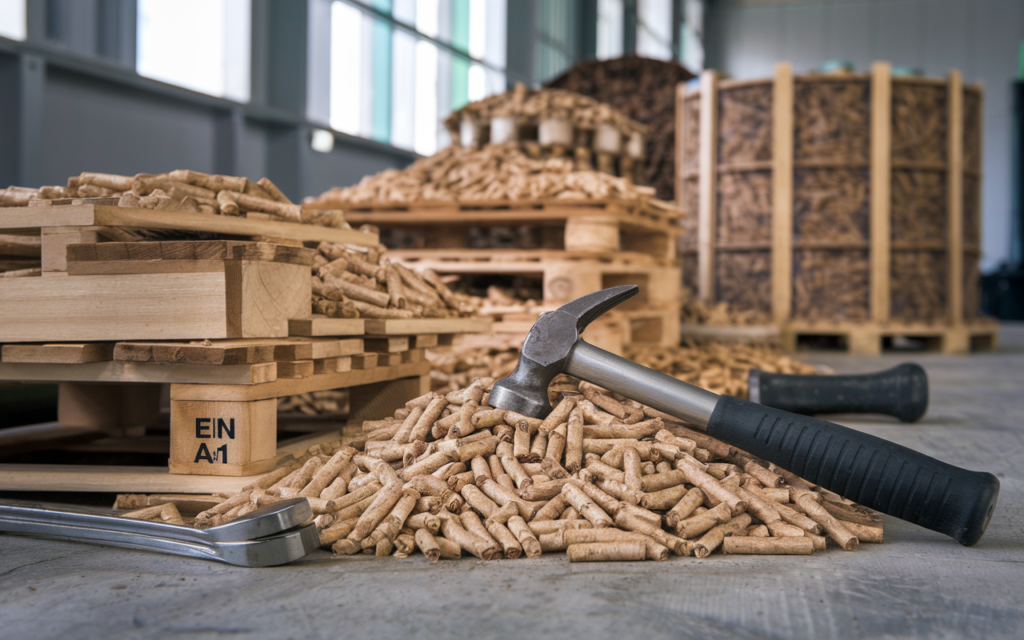
What are wood pellets?
Wood pellets are small cylinders of compressed wood, usually made from sawdust and shavings left over from sawmills and wood processing. The wood is dried, ground and pressed through a die. Heat and pressure soften the wood’s natural lignin, which binds the pellet together without glue.
They are used in pellet stoves and boilers for homes, in larger boilers for schools, hotels and public buildings, and in power and combined heat and power plants.
ENplus A1 specification
| Property | ENplus A1 requirement |
|---|---|
| Diameter | 6 or 8 mm |
| Moisture | 10% maximum |
| Ash | 0.7% maximum |
| Net calorific value | At least 16.5 MJ/kg (about 4.6 kWh/kg) |
| Mechanical durability | At least 98% |
| Fines (below 3.15 mm) | 1% maximum at the factory gate |
| Bulk density | 600 to 750 kg per cubic metre |
A1, A2, B and industrial pellets
| Class | Typical use | Key difference |
|---|---|---|
| ENplus A1 | Home stoves and boilers | Lowest ash, cleanest raw material |
| ENplus A2 | Larger residential and commercial boilers | Slightly higher ash allowed |
| ENplus B | Commercial and industrial boilers | Can include more bark and recycled wood residues |
| Industrial (I1 to I3) | Power plants and large CHP | Bought in bulk vessels on a looser specification |
How to verify an ENplus certificate
Fake certificates and fake bag labels are a known problem in the pellet trade. Before you buy:
- Ask for the ENplus ID of the producer or trader. It appears on genuine bags.
- Check it on the official ENplus website, which lists certified producers and traders.
- Make sure the name and address match the company you are dealing with.
- Ask for a recent test report from an accredited laboratory.
- Insist on inspection before loading for large orders.
If an offer has a price far below the market, uses an ENplus logo without an ID, or asks for payment before any inspection, treat it with caution.
Packaging and shipping
- 15 kg bags on pallets, the usual format for retail and home users
- Big bags of about one tonne for commercial users
- Bulk by truck with blower delivery, or by vessel for industrial buyers
What affects pellet prices
- Season: prices often rise before and during winter
- Raw material: sawmill output and timber markets
- Energy prices: high gas and oil prices increase demand for pellets
- Freight: pellets are bulky, so transport is a large share of the delivered cost
- Certification and packaging: certified, bagged A1 pellets cost more than bulk industrial pellets
Storing pellets
Keep pellets dry. Moisture makes them swell and break down into dust. Store bags off the ground, under cover and away from damp walls. Bulk silos need good ventilation and safe access, because stored pellets can release carbon monoxide.
Requesting an offer from Agromer
Agromer is an international commodity trader based in Saint-Avertin, France, since 1985. The producer’s certification, specification and terms are confirmed in each offer. Please send:
- Pellet class (A1, A2, B or industrial) and diameter
- Quantity and delivery schedule
- Packaging: 15 kg bags, big bags or bulk
- Delivery address or port, and delivery terms
See also our range of agricultural commodities and our Indonesian coal supply for industrial fuel buyers.
Frequently asked questions
What does ENplus A1 mean?
It is the top quality class of the ENplus certification scheme for wood pellets, with strict limits on ash, moisture, durability and fines.
What is the difference between A1 and A2 pellets?
A1 pellets have lower ash and are made from cleaner wood. A2 pellets allow slightly more ash and suit larger boilers.
How much energy is in a tonne of pellets?
ENplus A1 pellets contain at least 16.5 MJ/kg, or about 4.6 MWh per tonne.
How do I check if pellets are really ENplus certified?
Find the ENplus ID on the bag or documents and check it against the list of certified companies on the official ENplus website.
How should wood pellets be stored?
In a dry, covered and ventilated place, off the ground. Moisture breaks pellets down.
What are industrial wood pellets?
Pellets for power plants and large boilers, bought in bulk on a less strict specification than A1 heating pellets.