
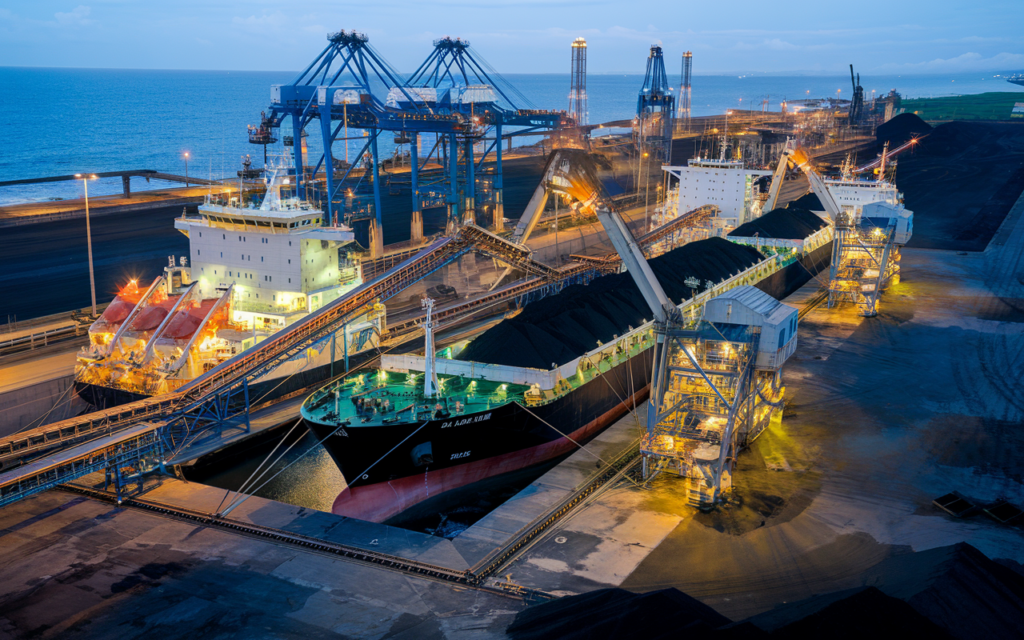
“Clean coal” is not one technology but a toolkit. Some tools cut local air pollution sharply, such as filters, scrubbers and NOx controls. Others reduce how much coal is burned, through higher efficiency. A few, like carbon capture, target CO2 directly but remain expensive and limited in use. Industrial coal users can combine them to meet emission rules and cut fuel costs.

The main technologies at a glance
| Technology | What it does | Status |
|---|---|---|
| Coal selection and washing | Lowers ash and sulphur before burning | Widely used |
| Supercritical and ultra-supercritical boilers | Higher efficiency, less coal per MWh | Standard for new large plants |
| Circulating fluidised bed (CFB) boilers | Burns a wide range of fuels; sulphur captured in the bed with limestone | Widely used, especially for lower-grade fuels |
| Electrostatic precipitators and fabric filters | Capture most fly ash and dust | Widely used |
| Flue gas desulphurisation (scrubbers) | Removes most SO2 | Widely used |
| Low-NOx burners and SCR | Cut NOx emissions | Widely used |
| Biomass co-firing | Replaces part of the coal with biomass | Used in some plants |
| Carbon capture, utilisation and storage (CCUS) | Captures CO2 from flue gas | A few large projects; costly |
1. Start with better coal
Choosing coal with low ash and sulphur, or washing coal to remove mineral matter, reduces emissions before combustion. Many Indonesian export coals are naturally low in ash and sulphur. See low-sulphur coal.
2. Burn it more efficiently
Higher steam temperatures and pressures in supercritical and ultra-supercritical boilers raise efficiency, so less coal is burned for each unit of power. Good combustion control and maintenance also help. See improving efficiency in coal-fired power plants.
3. Capture pollutants
- Particulates: electrostatic precipitators and fabric filters
- SO2: wet or dry scrubbers, or limestone injection in fluidised bed boilers
- NOx: low-NOx burners, staged combustion and selective catalytic reduction
- Mercury: activated carbon injection and co-benefits from other controls
4. Reduce CO2
- Efficiency upgrades reduce CO2 per unit of output.
- Co-firing biomass replaces part of the coal with a lower-carbon fuel. See wood pellets.
- Co-firing ammonia is being tested in some Asian power plants.
- CCUS can capture a large share of CO2 but adds significant cost and energy use, so only a few large projects operate.
5. Make use of by-products
Fly ash can replace part of the cement in concrete, and gypsum from scrubbers can be used in plasterboard. This turns waste streams into products.
Choosing the right mix
The best combination depends on your emission limits, plant age, coal supply and budget. For many industrial users, the most cost-effective steps are better coal selection, combustion tuning, good particulate control and efficiency upgrades. See the environmental impact of coal.
Buying Indonesian coal through Agromer
Agromer holds mandates for Indonesian thermal coal, typically low in ash and sulphur, for power plants and industrial buyers. Send us your specification, monthly quantity, contract length and discharge port. We work with an end-buyer LOI, payment by 100% DLC or SBLC, and SGS inspection at loading. See our Indonesian coal supply page.
Frequently asked questions
What is clean coal technology?
A set of technologies that reduce the pollution and emissions from coal use, from coal washing and efficient boilers to filters, scrubbers and carbon capture.
Can coal be burned cleanly?
Modern controls remove most particulates and SO2 and cut NOx sharply. CO2 remains the hardest to reduce.
What is a supercritical boiler?
A boiler that operates above the critical point of water, at high pressure and temperature, giving higher efficiency.
What is co-firing?
Burning another fuel, such as biomass or ammonia, alongside coal to reduce CO2 emissions.
Is carbon capture used on coal plants?
Only in a few large projects, because it is costly and uses a lot of energy.
What is the cheapest way to make coal use cleaner?
Usually choosing lower-ash, lower-sulphur coal and improving combustion efficiency.