
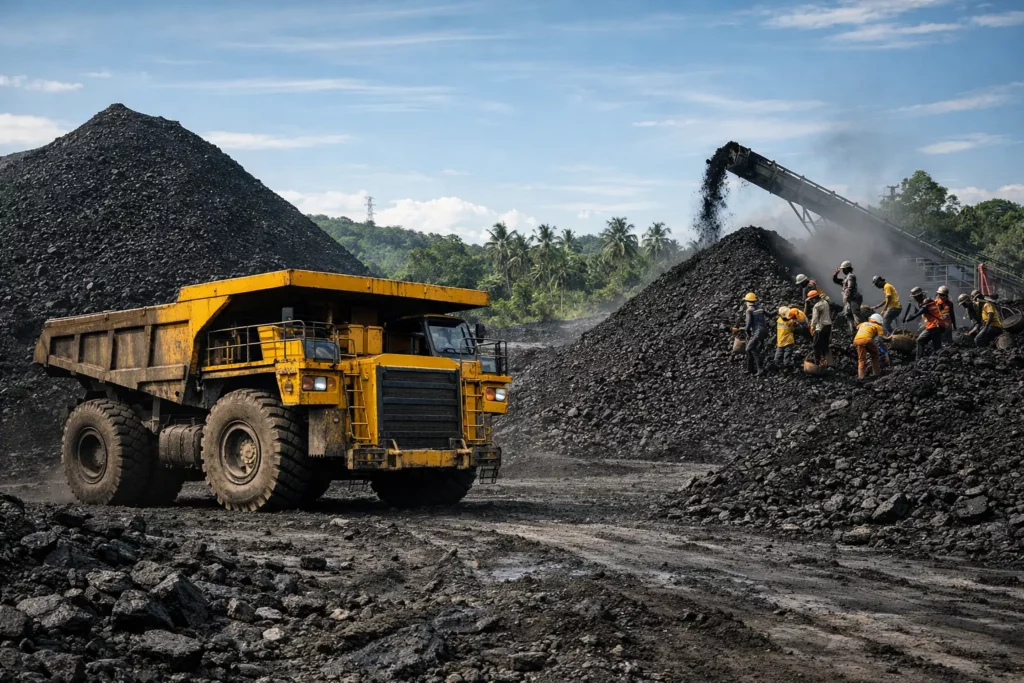
A reliable coal supply chain is built before something goes wrong. In 2026, coal buyers face falling Indonesian exports, supply disruptions such as the force majeure at Colombia’s Cerrejón mine, high gas prices that pull more demand toward coal, and volatile freight. Plants that depend on a single mine or on spot cargoes are most exposed.
These are the steps that make coal supply more secure.

The risks in 2026
| Risk | Example |
|---|---|
| Export policy | The IEA expects Indonesian exports to fall to about 495 Mt in 2026, from 517 Mt in 2025 |
| Mine disruptions | Cerrejón in Colombia declared force majeure on 1 June 2026 |
| Weather | Heavy rain slows mining and barging in Indonesia and Australia |
| Logistics | Rail problems in South Africa; port and anchorage congestion |
| Price swings | Newcastle coal rose from $108.40 (2025 average) to $147.10 per tonne in September 2026 |
| Sanctions and compliance | Restrictions on some origins, banks and vessels |
1. Diversify origins and suppliers
Qualify coal from at least two origins or mines that your plant can burn. A second source you have already tested can be activated quickly if the first is disrupted. See top coal exporting countries.
2. Use term contracts for the base load
Cover most of your needs with term contracts that set quantities, a shipment schedule, a price index and quality limits. Use spot purchases for flexibility.
3. Write strong contract terms
- Clear specification with rejection limits
- Agreed price index and adjustment formula
- Defined force majeure clauses, including notice and alternative supply
- Demurrage and laytime terms
- Independent inspection at loading
4. Plan for weather and seasons
Indonesia’s rainy season and Australia’s wet season can slow production and loading. Build extra stock before these periods and schedule shipments with buffers.
5. Hold the right amount of stock
Keep enough coal on site to cover typical delays, often several weeks of burn. Manage stockpiles to avoid self-heating, especially with high-moisture, low-rank coal: compact the piles, rotate stock and monitor temperatures.

6. Verify every cargo
Independent sampling and analysis at loading protects you from quality surprises that can cause boiler problems. See how to assess coal quality.
7. Check compliance on every link
Screen sellers, vessels and banks against the sanctions rules that apply to you, and keep records of origin and permits.
8. Work with experienced partners
Choose suppliers and traders who can name the mine, accept independent inspection and use secure payment instruments such as letters of credit. Be wary of offers that cannot be traced to a real producer.
How Agromer supports supply security
Agromer holds mandates for Indonesian thermal coal for power plants and industrial buyers. Every cargo is inspected by SGS at loading, and we work with an end-buyer LOI and payment by 100% DLC or SBLC. Send us your specification, monthly quantity, contract length and discharge port. See Indonesian coal and coal suppliers for power plants.
Frequently asked questions
What are the main risks to coal supply in 2026?
Lower Indonesian exports, mine disruptions such as Cerrejón, weather, logistics problems, price swings and sanctions.
How can I make my coal supply more reliable?
Diversify origins, use term contracts with clear terms, hold adequate stock and inspect every cargo.
How much coal stock should a plant hold?
Enough to cover typical shipping delays and seasonal disruptions, often several weeks of consumption. It depends on your logistics.
What is a force majeure clause?
A contract term that excuses a party from performing when events beyond its control, such as floods, prevent delivery.
Why use term contracts for coal?
They secure volumes and set price formulas in advance, reducing exposure to spot market swings.
Can stored coal catch fire?
Yes. Low-rank coal can self-heat. Compacting stockpiles, rotating stock and monitoring temperature reduce the risk.