
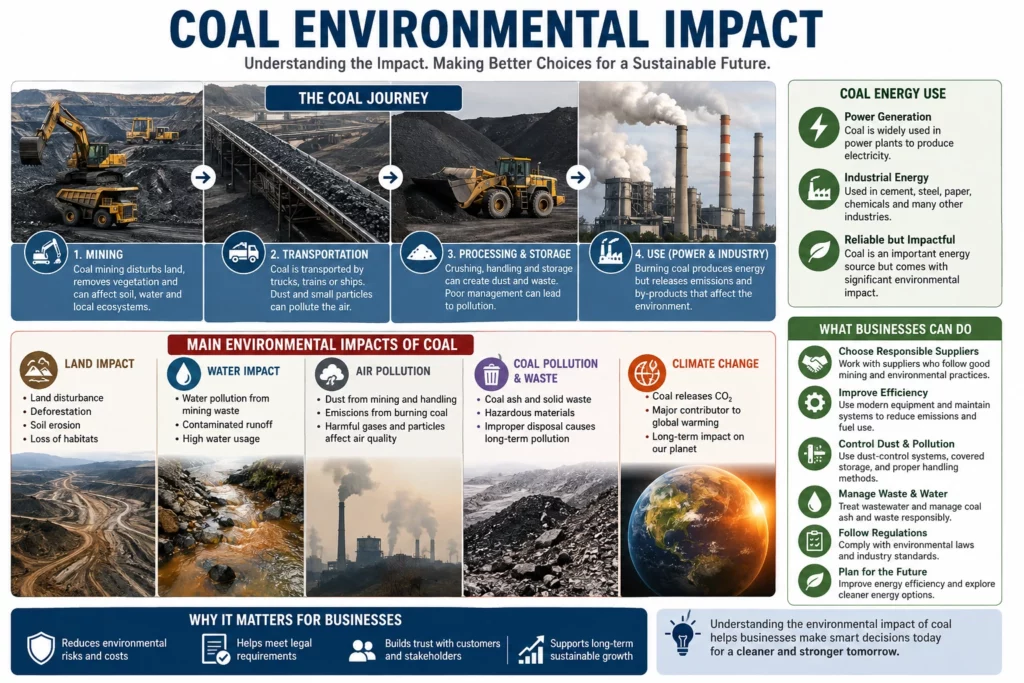
Explore the environmental impact of coal in industrial applications and learn effective strategies to mitigate its adverse effects. Understand the challenges and solutions for a more sustainable future.
Complete this application form to connect with an Agromer staff member who can answer all your questions about coal.
If you have any questions, feel free to ask us. We’ll do our best to respond within 24 hours. You can call us or email us.
Phone no: + 33 (0)2 47 80 23 78
Email: pthary@agromer.org
Coal is an important fuel used by many businesses and industries. It is used to make electricity, produce steel, run factories, and support many other industrial activities. But coal can also cause pollution and harm the environment when it is mined, moved, processed, and burned.
For businesses that buy, sell, transport, or use coal, it is important to understand the coal environmental impact. This helps companies make better decisions, follow environmental rules, and plan for cleaner operations.
Environmental Impact of Coal in Industrial Applications: How to Mitigate It
Coal has been a major source of energy for many years, especially in industries that need a lot of power, like factories and power plants. However, using coal has a big downside: it can harm the environment. This is known as the environmental impact of coal. When coal is burned, it releases harmful gases and particles into the air, which can cause air pollution and contribute to climate change. This is a serious problem because it affects our health and the planet.
In industrial applications, coal is often used because it is cheap and abundant. But the pollution it creates can damage the environment and make it harder for people to breathe. To solve this problem, scientists and engineers are working on ways to make coal usage more eco-friendly. This means finding methods to reduce the pollution that comes from burning coal. Some of these methods include using cleaner technologies and finding alternative energy sources that are less harmful to the environment.
Mitigating coal pollution is important for protecting our planet and ensuring a healthier future. By understanding the environmental impact of coal and finding ways to reduce its negative effects, we can continue to use this resource in a way that is safer for everyone.
What Is the Environmental Impact of Coal?
The environmental impact of coal starts from the time coal is taken from the ground. Coal mining can change the land and can affect soil, water, plants, and animals.
The problem can continue when coal is transported and burned. Burning coal creates smoke and gases that can cause air pollution. It also produces carbon dioxide, which is linked to climate change.
For companies in the coal supply chain, environmental care is becoming more important. Large industrial buyers now often want suppliers that can provide good-quality coal while also following responsible mining and environmental practices.
How Does Coal Affect the Environment?
Many people ask, how does coal affect the environment? There are several ways.
First, coal mining can disturb the land. Trees and plants may need to be removed before mining starts. Heavy machines can also change the shape of the land.
Second, mining can affect water. Waste from mining may enter nearby water sources if it is not handled correctly.
Third, burning coal creates air pollution. Coal can release gases and small particles into the air.
Fourth, coal produces carbon dioxide when it is burned. This is one reason coal is an important part of discussions about climate change.
So, the effects of coal on the environment can happen at many stages, from mining to final use.
Coal Mining Environmental Impact
The coal mining environmental impact is an important issue for mining companies, coal suppliers, power companies, and industrial buyers.
During coal extraction, large areas of land may be used. Mining equipment can remove soil and rock to reach the coal below the ground.
Some major concerns include:
- Land disturbance
- Loss of plants and trees
- Soil damage
- Dust from mining activities
- Noise from heavy equipment
- Water pollution
- Mining waste
- Changes to local ecosystems
The environmental impact of coal mining can be reduced when companies use proper mining plans, control dust, treat wastewater, manage waste, and restore land after mining.
Coal Extraction Environmental Impacts
The coal extraction environmental impacts depend on the type of mine and how the mine is managed.
Open-pit and surface mining can affect large areas of land. Underground mining has different risks, including changes in the ground and problems caused by mine waste.
Good mining companies try to reduce these problems. They may reuse water, control dust, manage mining waste, and restore mined land.
For B2B buyers, it can be useful to ask coal suppliers about their mining practices, quality controls, environmental systems, and required certifications.
How Does Coal Mining Affect the Environment?
How does coal mining affect the environment? The main effects can be seen in land, water, air, and local wildlife.
Mining can remove vegetation and disturb the soil. Trucks and mining machines can create dust. Water used during mining can also become dirty if it is not treated properly.
Mining companies can reduce these problems through better planning and environmental controls.
For companies buying coal in bulk, choosing a reliable supplier is important. A responsible supplier should have clear information about the source and quality of its coal.
Coal Pollution
Coal pollution is another major environmental concern.
Coal can create pollution during mining, transportation, processing, and burning. Dust can be created when coal is loaded, unloaded, crushed, or transported.
When coal is burned, it can release gases and particles into the air.
This is why businesses that handle large quantities of coal need good storage, transport, and handling systems.
Pollution From Coal
Pollution from coal can come from different sources.
Mining can create dust and waste. Coal transportation can create dust if coal is not covered or handled correctly. Coal processing can also produce dust and waste materials.
Coal power plants and industrial boilers create emissions when coal is burned.
Businesses can reduce some of these problems by using proper equipment, regular maintenance, dust-control systems, and pollution-control technology.
Does Coal Cause Pollution?
Yes, coal does cause pollution, especially when it is mined and burned without good environmental controls.
However, the amount and type of pollution can depend on the coal quality, the equipment being used, and the pollution-control systems installed by the company.
This is important for industrial buyers. When buying coal, companies should look at more than just the price. Coal quality, ash content, moisture, sulfur content, energy value, and supply reliability can also matter.
Environmental Concerns of Coal
There are several environmental concerns of coal for businesses and communities.
The main concerns include:
- Air pollution
- Water pollution
- Land disturbance
- Mining waste
- Dust
- Carbon emissions
- Climate change
- Damage to local ecosystems
These concerns are important for companies that operate mines, power plants, factories, steel plants, cement plants, and other large industrial facilities.
Coal Industry Pollution
Coal industry pollution can happen across the complete supply chain.
A coal business may be involved in mining, crushing, washing, storage, transportation, or trading. Each step needs proper environmental management.
For example, coal storage areas can create dust. Coal transportation can also create dust if trucks, rail wagons, or storage systems are not properly managed.
B2B companies can reduce these problems by using covered storage, dust-control equipment, water spraying systems, enclosed conveyors, and good site management.
Coal Energy Environmental Impact
Coal is widely used for energy, especially in power generation and heavy industries. But the coal energy environmental impact can be significant.
When coal is burned to produce energy, it creates carbon dioxide and other emissions.
For companies that use coal for industrial energy, improving boiler efficiency and using modern pollution-control equipment can help reduce emissions and fuel waste.
Energy efficiency is also good for business because using less fuel can reduce operating costs.
Environmental Impact of Coal Power Plants
The environmental impact of coal power plants is mainly connected with emissions, coal ash, water use, and waste management.
Coal power plants burn coal to produce heat. The heat is used to make steam, and the steam helps generate electricity.
Modern power plants can use pollution-control systems to reduce some harmful emissions. They also need proper systems for handling coal ash and other waste.
For B2B companies, choosing efficient equipment and maintaining it properly can help improve performance and reduce environmental problems.
Coal Industry and Climate Change
Coal industry climate change concerns are mostly connected to carbon dioxide emissions.
Coal contains carbon. When coal is burned, carbon combines with oxygen and creates carbon dioxide.
This is one reason coal is often discussed when companies plan their long-term energy strategy.
Many industrial buyers are now looking at ways to use energy more efficiently and reduce their emissions. Some businesses are also adding renewable energy to their power mix.
Is Coal Bad for the Environment?
Is coal bad for the environment? Coal can have a large environmental impact, especially when it is mined or burned without proper controls.
At the same time, coal remains an important industrial fuel in many countries. Steel, cement, power, and other industries may continue to use coal because of its energy value and availability.
The business goal is to understand the environmental risks and manage them properly.
Why Is Coal Harmful to the Environment?
Why is coal harmful to the environment? The main reasons are mining disturbance, pollution, waste, and emissions from burning coal.
The complete environmental impact depends on how coal is mined, transported, processed, and used.
This is why responsible coal sourcing is important for B2B buyers.
What Does Coal Do to the Environment?
Coal can affect four main areas:
Land: Mining can disturb soil and vegetation.
Water: Mining and waste can affect water quality if not managed correctly.
Air: Mining, coal handling, and burning can create dust and air pollution.
Climate: Burning coal releases carbon dioxide, which contributes to climate change.
What Can Businesses Do?
Businesses cannot always stop using coal immediately, especially in industries where coal is an important fuel or raw material. But they can take steps to reduce its environmental impact.
Companies can:
- Buy coal from reliable suppliers.
- Check coal quality before buying.
- Use efficient industrial equipment.
- Control coal dust during storage and transport.
- Treat industrial wastewater.
- Manage coal ash and mining waste properly.
- Maintain boilers and other equipment.
- Follow local environmental laws.
- Improve energy efficiency.
- Explore cleaner energy options where practical.
Choosing a Coal Supplier for B2B Needs
For companies buying coal in bulk, price is only one part of the decision.
A good supplier should be able to provide clear information about coal quality, origin, specifications, available quantities, delivery options, and required documents.
Buyers should also consider whether the supplier follows responsible mining and environmental practices.
A reliable supply chain can help factories, power plants, steel producers, cement companies, traders, and other industrial buyers get the coal they need while managing business and environmental risks.
About Agromer
Agromer is an international commodity trader that sources Indonesian thermal coal for industrial buyers. Coal is a major source of energy for industrial processes, but its use can harm the environment through air and water pollution, deforestation and greenhouse gas emissions. This article looks at those impacts and at practical ways to reduce them.
Want to reduce the environmental impact of coal in industrial applications? Contact us at +33 (0)2 47 80 23 78 or email us at pthary@agromer.org to explore sustainable solutions today. Let’s work together to mitigate the effects of coal on our environment.
Mitigating the Environmental Impact of Coal in Industrial Applications: Strategies for a Sustainable Future
Coal has been a widely used source of energy in industrial applications for many years due to its abundance and affordability. However, the environmental impact of coal usage is a growing concern as it contributes significantly to air and water pollution, as well as greenhouse gas emissions that contribute to climate change.
One of the main environmental impacts of coal in industrial applications is air pollution. Burning coal releases a variety of harmful pollutants into the atmosphere, including sulfur dioxide, nitrogen oxides, and particulate matter. These pollutants can have a range of negative effects on human health, including respiratory problems, cardiovascular issues, and even premature death. In addition, these pollutants can also contribute to the formation of smog and acid rain, which can harm ecosystems and wildlife.
Coal mining also has significant environmental impacts, including habitat destruction, soil and water contamination, and the generation of large amounts of waste. In addition, the transportation of coal from mines to industrial facilities can contribute to air pollution and greenhouse gas emissions.
Another environmental impact of coal in industrial applications is water pollution. Coal mining and processing can contaminate water sources with heavy metals, sediment, and other pollutants. This can harm aquatic ecosystems, as well as threaten the quality of drinking water for nearby communities.
In addition to air and water pollution, coal usage also contributes to climate change. When coal is burned, it releases carbon dioxide and other greenhouse gases into the atmosphere. These gases trap heat in the Earth’s atmosphere, leading to global warming and changes in climate patterns. As a result, coal usage is a major contributor to the problem of climate change and its associated impacts, such as rising sea levels, extreme weather events, and loss of biodiversity.
Despite these environmental impacts, there are ways to mitigate the harm caused by coal in industrial applications. One approach is to improve the efficiency of coal-fired power plants through the use of advanced technologies, such as carbon capture and storage (CCS). CCS involves capturing carbon dioxide emissions from power plants and storing them underground or using them for other purposes, such as enhanced oil recovery. This can help reduce the amount of greenhouse gases released into the atmosphere and mitigate the contribution of coal to climate change.
Another way to mitigate the environmental impact of coal is to transition to cleaner and more sustainable energy sources, such as renewable energy. Wind, solar, and hydropower are all sources of energy that do not produce greenhouse gas emissions or air pollutants. By investing in these technologies and phasing out coal-fired power plants, it is possible to reduce the environmental impact of industrial applications that rely on coal.
In addition, government regulations and policies can play a key role in mitigating the environmental impact of coal. By setting emissions standards, promoting energy efficiency, and incentivizing the use of cleaner energy sources, policymakers can help reduce the harm caused by coal in industrial applications. Public awareness and advocacy are also important in raising awareness about the environmental impacts of coal and advocating for more sustainable energy solutions.
In conclusion, the environmental impact of coal in industrial applications is significant and widespread, contributing to air and water pollution, as well as climate change. However, there are ways to mitigate this harm, including improving the efficiency of coal-fired power plants, transitioning to cleaner energy sources, and implementing government regulations and policies. By taking action to reduce the environmental impact of coal, we can protect human health, the environment, and the planet for future generations.
Final Thoughts
The coal environmental impact is an important topic for the whole coal industry. The effects can start with coal mining and continue through transportation, processing, and burning.
The main issues include land disturbance, water pollution, coal pollution, air emissions, mining waste, and climate change.
For B2B companies, understanding these issues can help them choose better suppliers, improve operations, reduce waste, and follow environmental requirements.
Coal is still an important industrial fuel in many markets. Good planning, responsible sourcing, efficient equipment, and better environmental controls can help businesses use coal in a more responsible way.
To place your order or for any inquiries, reach out to us. We look forward to working with you and helping your business grow.
Mobile No: + 33 (0)2 47 80 23 78
Email Id: pthary@agromer.org
Agromer sources thermal coal from Indonesia for power plants and industrial buyers. See our Indonesian coal supply page or contact our trading team for an offer.