
Jet A1 is the standard fuel for jet and turboprop aircraft around the world. It is a highly refined kerosene, made to strict international specifications so that every airport delivers fuel that behaves the same way in an engine. Its most important feature is a very low freezing point, at most −47 °C, which keeps it flowing at cruising altitude.
If you are new to buying aviation fuel, the first thing to know is that the specification is everything. Airlines and airports will only accept fuel that is certified to the right standard and handled under strict quality control from the refinery to the wing. This guide explains the specification, the standards behind it and how bulk Jet A1 deals usually work.
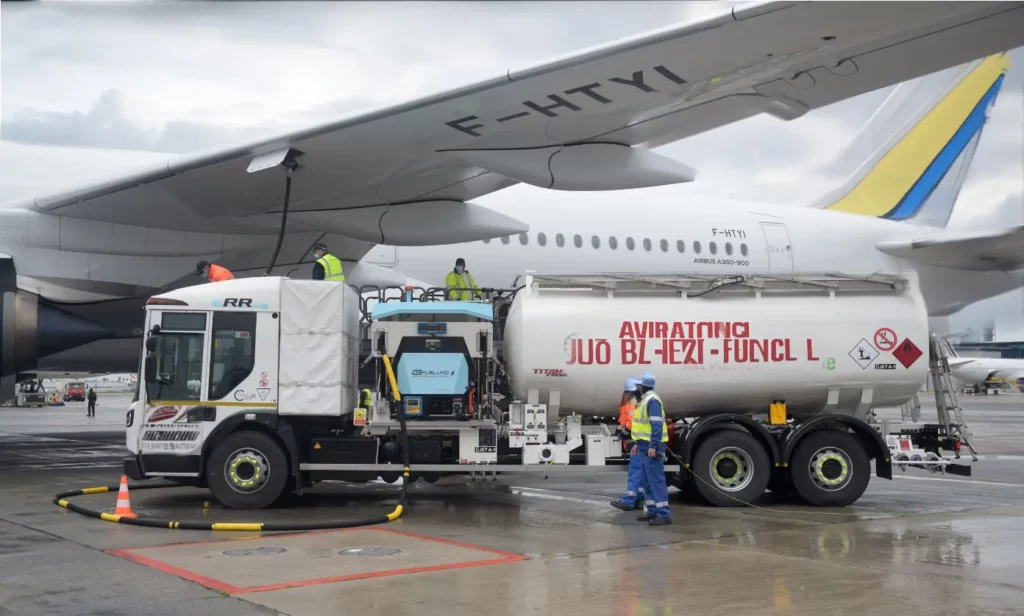
What is Jet A1 fuel?
Jet A1 is an aviation turbine fuel (ATF, also called avtur) made from kerosene. It is clear to straw-coloured and contains approved additives, such as antioxidants and a static dissipator, to protect fuel quality and safety.
There are three main civil jet fuels:
- Jet A1: the international standard, freezing point −47 °C maximum
- Jet A: used mainly within the United States, freezing point −40 °C maximum
- Jet B: a wide-cut fuel for very cold regions, now rarely used
Jet A1 specification: key limits
| Property | Limit |
|---|---|
| Freezing point | −47 °C maximum |
| Flash point | 38 °C minimum |
| Density at 15 °C | 775 to 840 kg/m³ |
| Total sulphur | 0.30% by mass maximum |
| Specific energy | 42.8 MJ/kg minimum |
| Viscosity at −20 °C | 8.0 mm²/s maximum |
| Smoke point | 25 mm minimum (or 18 mm with naphthalenes 3% maximum) |

Which standards apply?
- DEF STAN 91-091 (UK Ministry of Defence): the reference specification for Jet A1 in much of the world
- ASTM D1655: the US standard covering Jet A and Jet A1
- AFQRJOS checklist: the Joint Inspection Group’s combined requirements, widely used at jointly operated airport fuel facilities
- EI/JIG 1530: quality assurance for the handling of aviation fuel from refinery to airport
A genuine cargo comes with a refinery certificate of quality and a clear chain of custody. Without these, airports will not accept the fuel.
Sustainable aviation fuel (SAF)
SAF is jet fuel made from renewable or waste feedstocks, such as used cooking oil, animal fats, agricultural waste or synthetic routes using captured CO2. Approved production pathways are listed in ASTM D7566, and SAF can currently be blended with conventional Jet A1 up to 50%, depending on the pathway. Once blended and certified, the fuel is treated as standard Jet A1. SAF is more expensive than fossil jet fuel and still a small share of supply.
What drives the price of Jet A1?
Jet fuel prices follow crude oil and the refining margin for middle distillates. Physical cargoes are usually priced against published assessments, such as Platts, plus or minus a premium for location and terms. In September 2026 Brent crude averaged $116.80 per barrel (World Bank), well above its 2025 average of $69, so fuel buyers faced much higher costs this year. Freight, insurance and the delivery point also affect the final price.
How bulk Jet A1 purchases work
Large Jet A1 deals are business-to-business transactions between refiners, traders, airlines, airports and fuel distributors. A typical sequence:
- Enquiry: the buyer states the product, specification, quantity, delivery point and schedule.
- Letter of Intent (LOI): an end-buyer LOI is needed before an offer is issued.
- Offer and contract: price basis, quantity, inspection and delivery terms are agreed in a sales and purchase agreement.
- Payment security: usually a documentary letter of credit or SBLC from a recognised bank.
- Inspection and delivery: independent inspection, such as SGS, confirms quantity and quality at loading.
Be cautious with offers that skip these steps, demand payment up front without bank instruments, or promise unusually low prices. See our guide on how to verify an international commodity supplier.
Jet A1 through Agromer
Agromer trades refined petroleum products, including Jet A1 and EN590 diesel, under refinery mandate. Availability and requirements are confirmed for each enquiry, and an end-buyer Letter of Intent is required before an offer is issued. See our petroleum products page and trade compliance information.
Frequently asked questions
What is Jet A1 fuel made of?
Highly refined kerosene, a mixture of hydrocarbons, with small amounts of approved additives such as antioxidants and a static dissipator.
What is the freezing point of Jet A1?
−47 °C maximum. Jet A, used mainly in the United States, has a maximum freezing point of −40 °C.
What is the difference between Jet A and Jet A1?
They are very similar kerosene fuels. Jet A1 has a lower maximum freezing point (−47 °C against −40 °C) and is the international standard.
Which standards does Jet A1 meet?
DEF STAN 91-091 and ASTM D1655, with handling and quality control under EI/JIG 1530 and the AFQRJOS checklist.
Can sustainable aviation fuel replace Jet A1?
SAF is blended with Jet A1, currently up to 50% depending on the production pathway. The blend is then certified and used like standard Jet A1.
How is Jet A1 priced?
Usually against published price assessments such as Platts, which follow crude oil and refining margins, plus a premium or discount for location and terms.