
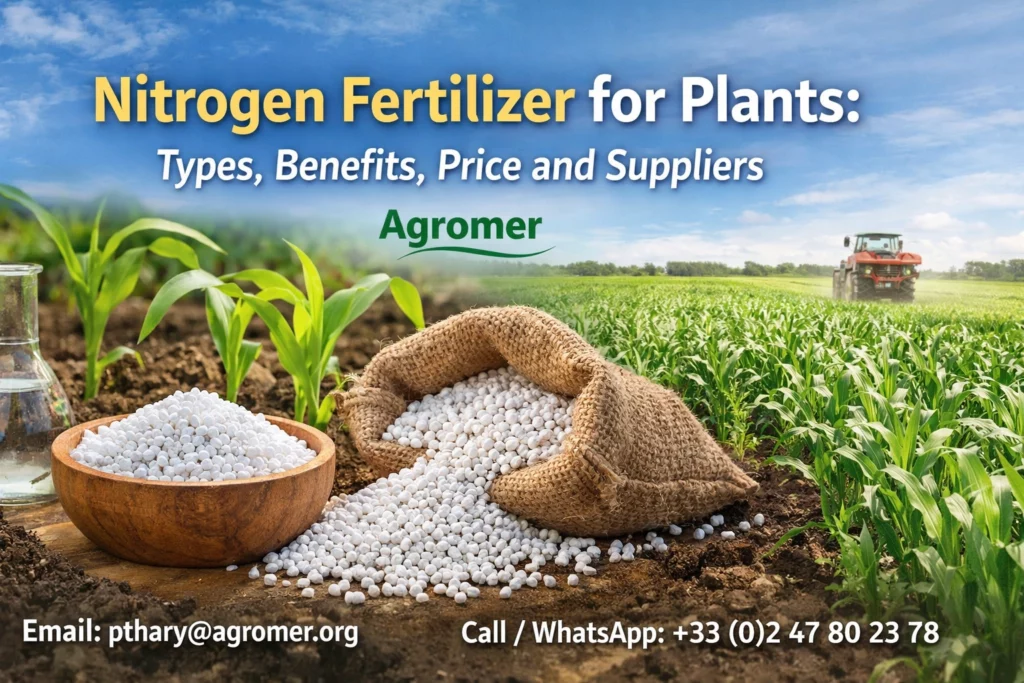
If your plants are not growing properly or their leaves are turning light green or yellow, the main reason is often lack of nitrogen. Nitrogen fertilizer is one of the most important nutrients for plant growth.
From small home gardens to large farms, nitrogen fertilizer plays a key role in increasing crop production. It helps plants grow faster, improves leaf quality, and gives better overall results.
In simple terms, if you want healthy, green and fast-growing plants, nitrogen fertilizer is a must.
Buy High Quality Nitrogen Fertilizer for plants from Trusted Manufacturer, Supplier & Distributor
If you need Nitrogen fertilizer in bulk, whether for farming, distribution, or export, please fill out our application form today to get the best price, reliable supply, and expert support for high-quality potash fertilizer and crop nutrition solutions.
Whether you are a farmer, distributor, exporter, or bulk fertilizer buyer, understanding how Nitrogen fertilizer works can help you increase production and profits. In this guide, we explain everything about Nitrogen fertilizer in simple language, based on real farming experience.
Email: pthary@agromer.org
Call / WhatsApp: +33 (0)2 47 80 23 78
What is Nitrogen Fertilizer
Nitrogen fertilizer is a chemical or organic substance that provides nitrogen to plants. Nitrogen is one of the three main nutrients required for plant growth, along with phosphorus and potassium.
Plants cannot grow properly without nitrogen. It is mainly responsible for leaf growth and green color.
In Simple definition
Nitrogen fertilizer is used to supply nitrogen to plants so they can grow faster, greener and healthier.
Why Nitrogen is Important for Plants
Nitrogen is essential for many plant processes. It directly affects how plants look and grow.
Main roles of nitrogen
- Helps plants produce chlorophyll (green color)
- Supports growth of leaves and stems
- Improves plant size and strength
- Helps in making proteins inside plants
- Increases crop yield
Real life example
In crops like paddy, wheat and maize, nitrogen fertilizer shows results quickly. Within a week of applying urea, leaves become dark green and plant growth improves.
If nitrogen is not enough, plants become weak, yellow and produce low yield.
Types of Nitrogen Fertilizers
There are different types of nitrogen fertilizers available in the market. Each type works differently.
1. Urea
Urea is the most popular nitrogen fertilizer in India.
- Contains about 46 percent nitrogen
- Very affordable due to government subsidy
- Easily available in all areas
Best for: All crops including rice, wheat, vegetables
Practical tip: Always apply urea before irrigation so plants can absorb it properly.
2. Ammonium Sulphate
This fertilizer contains both nitrogen and sulfur.
- Good for sulfur-deficient soil
- Improves soil fertility
Best for: Rice, mustard, pulses
3. Ammonium Nitrate
This is a fast-acting fertilizer.
- Quickly provides nitrogen to plants
- Useful in colder climates
Best for: Vegetables and cereals
4. Calcium Ammonium Nitrate (CAN)
This fertilizer releases nitrogen slowly.
- Safer for soil
- Reduces acidity
Best for: Fruits, vegetables and garden plants
5. Organic Nitrogen Fertilizers
These are natural fertilizers.
Examples include:
- Cow dung
- Compost
- Vermicompost
Best for: Organic farming
Benefit: Improves soil health over time
Benefits of Nitrogen Fertilizer
Using nitrogen fertilizer correctly gives many advantages.
1. Faster Growth
Plants grow quickly, especially leaves and stems.
2. Green Leaves
Nitrogen improves chlorophyll, which gives plants a rich green color.
3. Higher Yield
Farmers get more production from the same land.
4. Better Quality Crops
Grains, fruits and vegetables become healthier and bigger.
5. Strong Plants
Plants become more resistant to stress.
How to Use Nitrogen Fertilizer Properly
Using nitrogen fertilizer in the right way is very important. Wrong use can damage plants.
Best methods
- Apply in parts, not all at once
- Mix fertilizer properly with soil
- Use water after applying
- Avoid applying before heavy rain
- Test soil before use
Example for rice farming
- First dose during planting
- Second dose during growth stage
- Third dose before flowering
This method gives better results than using all fertilizer at one time.
Contact Us for Latest Cost of Nitrgone Fertilizer with respect to quantity and Quality
Email: pthary@agromer.org
Call / WhatsApp: +33 (0)2 47 80 23 78
Nitrogen Fertilizer Price
International pricing of nitrogen fertilizer is very important if you are planning to trade, import, or export. Prices in the global market are different from India because they depend on raw materials, energy costs, and global demand.
Global Price of Nitrogen Fertilizers (2026 Estimate)
International prices are usually calculated per metric ton (MT).
Average global price range
- Urea: 300 to 450 USD per metric ton
- Ammonium Nitrate: 350 to 500 USD per metric ton
- Ammonium Sulphate: 150 to 250 USD per metric ton
- Calcium Ammonium Nitrate (CAN): 250 to 400 USD per metric ton
Why International Nitrogen Fertilizers Cost Are Higher
There are several reasons why nitrogen fertilizer costs more globally:
1. Raw Material Cost
Nitrogen fertilizers are made using natural gas. If gas prices increase, fertilizer prices also increase.
2. Energy Cost
Production of urea and ammonia requires a lot of energy. Countries with high energy costs have higher fertilizer prices.
3. Supply and Demand
If demand increases globally (for example during farming seasons), prices go up.
4. Export Restrictions
Some countries restrict exports to control domestic supply, which increases global prices.
5. Shipping and Logistics
Freight charges, port costs and transportation add to the final export price.
Price Trends in the International Market
Stable vs Fluctuating Prices
- Prices are not fixed and change frequently
- They depend on oil and gas prices
- War, trade policies and weather also affect pricing
Example trend
- During high demand periods, urea prices can cross 500 USD/MT
- During low demand, prices may fall below 300 USD/MT
FOB vs CIF Pricing (Important for Export)
When dealing in international markets, prices are quoted in two main ways:
FOB (Free on Board)
- Price includes cost up to port
- Buyer pays shipping
CIF (Cost, Insurance, Freight)
- Includes shipping and insurance
- Higher than FOB price
Example
- Urea FOB price: 320 USD/MT
- Urea CIF price: 360–380 USD/MT
Top Exporting Countries (Price Influence)
These countries control global pricing:
- China
- Russia
- Qatar
- Saudi Arabia
- USA
If production changes in these countries, global prices change.
Top Importing Countries
- India
- Brazil
- USA
- African countries
India is one of the largest importers, but due to subsidy, domestic prices remain low.
Top Supplier Brands and Companies Worldwide (Nitrogen Fertilizer)
The global nitrogen fertilizer market is dominated by a few large companies that produce and supply products like urea, ammonia, and ammonium nitrate at a massive scale. These companies operate across multiple countries and supply fertilizers to farmers, governments, and distributors worldwide.
Below is a simple and detailed list of the top nitrogen fertilizer companies globally.
1. Yara International (Norway)
- One of the world’s largest nitrogen fertilizer producers
- Strong presence in Europe, Asia, Africa and the Americas
- Focus on sustainable and green ammonia production
Yara is considered a global leader in nitrogen-based fertilizers and digital farming solutions.
2. CF Industries Holdings (USA)
- Major producer of ammonia, urea and UAN solutions
- Strong distribution network in North America
- Focus on low-carbon fertilizer production
CF Industries is one of the largest suppliers of nitrogen fertilizers globally.
3. Nutrien Ltd. (Canada)
- One of the biggest fertilizer companies in the world
- Supplies nitrogen, phosphate and potash fertilizers
- Strong global retail network
Nutrien plays a major role in global fertilizer supply chains.
4. Qatar Fertiliser Company (QAFCO) (Qatar)
- One of the largest urea producers in the world
- Large export capacity
- Advanced production facilities
QAFCO is known for high-volume production and exports globally.
5. SABIC (Saudi Arabia)
- Major chemical and fertilizer company
- Strong export presence in Asia and Africa
- Investing in sustainable fertilizer production
SABIC is a key supplier in the Middle East and global markets.
6. EuroChem Group (Switzerland/Russia)
- Large global fertilizer producer
- Supplies nitrogen, phosphate and potash
- Strong presence in Europe and Latin America
EuroChem is known for integrated production and global exports.
7. OCI N.V. (Netherlands)
- One of the largest nitrogen fertilizer producers in Europe
- Operates plants across multiple continents
- Focus on ammonia and methanol
OCI is a major player in international nitrogen markets.
8. Koch Fertilizer (USA)
- One of the largest privately held fertilizer companies
- Produces ammonia, urea and other nitrogen products
- Supplies globally
Koch Fertilizer handles millions of tons annually.
9. Pupuk Indonesia (Indonesia)
- Major producer in Southeast Asia
- Government-supported company
- Strong domestic and export market
Pupuk Indonesia is an important supplier in Asian markets.
10. IFFCO (India)
- One of the largest cooperative fertilizer companies
- Strong distribution across India
- Also exports fertilizers
IFFCO is a key player in both domestic and international markets.
Other Important Global Players
These companies also play a big role in nitrogen fertilizer supply:
- Acron Group (Russia)
- BASF SE (Germany)
- CNPC (China)
- National Fertilizers Limited (India)
- Coromandel International (India)
These companies contribute significantly to global production and trade.
Key Insight for Business
If you are planning to enter fertilizer trading or export:
- International prices are much higher than local Indian prices
- Profit margin depends on sourcing at the right price
- Bulk buying reduces cost
- Timing the market is very important
How to Choose the Right Nitrogen Fertilizer
Before buying nitrogen fertilizer, consider these factors:
Important points
- Type of crop
- Soil condition
- Budget
- Weather conditions
- Farming method (organic or chemical)
Simple advice
If you are a beginner, start with urea. It is easy to use and affordable.
Common Mistakes to Avoid
Many farmers make mistakes while using nitrogen fertilizer.
Avoid these errors
- Using too much fertilizer
- Applying before rain
- Not checking soil condition
- Using only nitrogen without other nutrients
Practical tip
Always use balanced fertilizer with nitrogen, phosphorus and potassium for best results.
FAQs
What is the best nitrogen fertilizer for plants
Urea is the most common and affordable option for most crops.
How often should nitrogen fertilizer be applied
Usually 2 to 3 times during the crop cycle.
Can excess nitrogen harm plants
Yes, too much nitrogen can burn plants and reduce yield.
Is organic fertilizer better
Organic fertilizers improve soil health, but chemical fertilizers give faster results.
Why are my plants still yellow
It could be due to poor soil, lack of water, or incorrect fertilizer use.
Order bulk Nitrogen Fertilizer
Nitrogen fertilizer is one of the most important nutrients for plant growth. It helps plants grow faster, improves leaf color, and increases crop production.
For beginners, urea is the best starting option because it is simple and low cost. However, for long-term farming, it is better to combine chemical and organic fertilizers.
If you are planning to start a fertilizer business or want to supply nitrogen fertilizer, this is a good opportunity. Demand is increasing every year in India.
You can also explore related topics like NPK fertilizers, organic farming and soil testing to improve your farming knowledge and grow better crops.
Email: pthary@agromer.org
Call / WhatsApp: +33 (0)2 47 80 23 78